Savitri Era of those who adore, Om Sri Aurobindo and The Mother.

Tuesday, July 14, 2009

Kittu Reddy’s book A Vision of United India is a must-read

A Vision of United India: A Review
By Anurag Banerjee

On 15 August 1947 Sri Aurobindo had given a message to commemorate the independence of India in which he had spoken of his five dreams. What follows is a significant passage from his message:
“But the old communal division into Hindus and Muslims seems now to have hardened into a permanent political division of the country. It is to be hoped that this settled fact will not be accepted as settled for ever or as anything more than a temporary expedient. For if it lasts, India may be seriously weakened, even crippled: civil strife may remain always possible, possible even a new invasion and foreign conquest. India’s internal development and prosperity may be impeded, her position among the nations weakened, her destiny impaired or even frustrated. This must not be; the partition must go. Let us hope that that may come about naturally, by an increasing recognition of the necessity not only of peace and concord but of common action, by the practice of common action and the creation of means for that purpose. In this way unity may finally come about under whatever form—the exact form may have a pragmatic but not a fundamental importance. But by whatever means, in whatever way, the division must go; unity must and will be achieved, for it is necessary for the greatness of India’s future.”

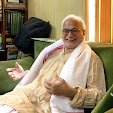
In his message Sri Aurobindo had spoken of his grand vision—the vision of a unified India which means India and Pakistan would exist as one single nation. This vision is echoed in Prof. Kittu Reddy’s book A Vision of United India: Problems and Solutions. Prof. Reddy is an inmate of Sri Aurobindo Ashram since 1941. An intellectual par excellence and scholar of the highest rank, he combines in himself the qualities of a teacher and a motivator. He has been associated with the Indian Army since 1987 and has conducted workshops dealing with motivation, leadership and Indian nation with them. Those who know him closely would never fail to notice that he is one of those rare beings who have combined the paths of Jnana Yoga and Karma Yoga which has, in turn, led to his progress as a sadhak of the Integral Yoga. Therefore when he writes, words that flow down from his pen finds its source in the higher levels of consciousness which explains the root of his profound insight.
A Vision of United India is divided into two sections: Problems and Solutions. In the first part of the first section, Prof. Reddy has discussed the political history of ancient and medieval India and also evaluated the success and failure to establish a sound political unity in the country. He has spoken of the cultural and spiritual unity that prevailed in ancient India but rightly remarks that those could never be ‘a sufficient basis for a vigorous national life’; in order to achieve so, a political unification was required. However this unification was never achieved. According to his observation: ‘But each time an attempt to find such a solution was made, a solution that might securely have evolved and found its true means and form and basis, it did not last. The difficulties were great, the conditions were not ripe, and there was instead at attempt to establish a single administrative empire.’ (p. 18) And he remarks: ‘One might even say that the guardians of India’s destiny wisely compelled it to fail so that her inner spirit might not perish and her soul barter for an engine of temporary security, the deep sources of its life.’ (Ibid.) He goes on to explain the advent of the Sultanates and Islamic thought discussing the traits of the Muslim Rule followed by a brief history of Islam and the fundamental concepts of Hinduism accompanied by its tenets and consequences. After discussing the consequences of Islamic invasion of India he gives an overview of India under the British Rule till 1947.

The second half of the first section comprises of a significant and meticulous discussion and evaluation of the political scenario of India from the post-partition era to the present age where the author speaks of the Kashmir problem and the other troubles India had to face from Pakistan. A detailed discussion of the Bangladesh War is followed by a write-up on the Military Rule in Pakistan which contains an informative analysis of the working of the dictators who ruled Pakistan as Presidents. In the chapter The Present Situation of Pakistan, the author makes a serious observation (p. 201): ‘A sinking Pakistan will insist on sinking India too.’ And he explains that this might happen since ‘proxy-war’ is a very cost-effective strategy for Pakistan as it consumes a small portion of its defence expenditure whereas it inflicts an excessively high cost on India. However, he says that in this process Pakistan would ultimately disintegrate from within.
The second section of the book (Solutions) puts forward the reasons leading to the prospective eradication of the division between India and Pakistan which is based on Prof. Reddy’s detailed study of Political Science under the light of Sri Aurobindo. After analyzing the obstructions to unite India and Pakistan, he has focused on the points that may help in establishing the unity between the two countries. He cites the instances of the unification of Germany and Vietnam and adds that the unification of India and Pakistan can be an attainable reality. This section is particularly important as it include thought-provoking chapters like Factors Leading to Unity in the Subcontinent and The Hindu-Muslim Unity where he speaks of the various measures that should be adopted by the Government of India to materialize the unification of India and Pakistan. He suggests that the partition should not be accepted as final by the Indian Government and a policy decision needs to be taken for the annulment of the partition. He states the following steps (p. 263):
· ‘Increase people to people contact in a big way in every field of activity…
· Increase economic cooperation between the two governments if possible and between the people of the two nations even if the Government of Pakistan does not cooperate…
· Take the strongest steps to curb terrorism in any form; give the Army a free hand in their operations against the terrorists. Ensure that political interference is completely stopped.
· Take steps to create a climate of understanding and goodwill between all the religions within India itself. This is an important factor and needs to be pursued vigorously.’

At the same time he proposes certain steps to be taken towards Pakistan which are as follows:
· Weakening the military of Pakistan by supporting democracy in the country. Prof. Reddy adds that one can envisage the unification of the armies of the two nations at a later stage.
· Developing and nurturing the constituencies in Pakistan whose livelihood and prosperity depends on good relations with India for the purpose of developing trade relations.
· Enable the secular minded people of Pakistan to come closer to India thus enabling the exchange of educational and cultural activities.
· Strengthening India’s relation with the United States, Russia and China as Islamic fundamentalism can be a threat to the stability of their society as well.

To bring about the much-desired unity among the Hindus and the Muslims, Prof. Reddy suggests that the cultural leaders of both Hinduism and Islam will have to bring forward ‘the deeper Indian ethos’ that is ‘intrinsically tolerant of all religions.’ In his own words (p. 313): ‘This ethos will give all minorities their civic dues but will not keep pampering them out of fear of losing their votes. And it will insist on a common civil code as indispensable to a genuine secularism, a code for all communities which will override whenever necessary in the interests of the whole country, the code peculiar to each community. That ethos will also do away with the current custom of special reservation of seats in the parliament on a communal or else caste basis. No communities or castes should be recognized. All citizens will be Indians and they will be members of parliament by popular election according to their merit. Equal opportunities will be given to all elements of the nation to progress and share in the guidance of the country.’ Another suggestion Prof. Reddy makes is that it is essential to re-interpret Islam and all other religions ‘in their true historical perspective.’ These steps could prepare the platform for promotion from Religion to Spirituality as it is the only way of overcoming the religious division.
This book is also significant as it includes certain illuminating passages from Sri Aurobindo’s writings where Sri Aurobindo has discussed the various means by which the much-desired Hindu-Muslim unity can be achieved. These passages are particularly important as it reveals how much concerned Sri Aurobindo was to bring about the said unity. In the much-publicized biography of Sri Aurobindo (The Lives of Sri Aurobindo by Peter Heehs), Sri Aurobindo has been accused of being responsible for the disunity among Hindus and Muslims and partition of India as well and there are many who believes in this aforesaid nonsense. This masterpiece from the pen of Prof. Reddy would certainly shut the mouths of those who propagate against Sri Aurobindo of being a Hindu fundamentalist.
Prof. Reddy is a visionary who dreams of the unification of India and Pakistan and in this monumental work of his, he has explicitly discussed how the vision could be materialized. This book serves as a guideline which shows us the ways to be taken to eradicate a historical blunder called ‘Partition’ whose decision was taken by a handful of men (who were hailed as leaders) and its consequences were suffered by millions. It also led to the creation of an environment of non-stop tension between the two nations which still prevails in a glorified form. This book is special because it comes from the pen of a spiritual person with an astounding political consciousness. This book is a must-read for all those who love India truly.

Sunday, July 12, 2009

The shakti is suppressed under poverty, hunger and ignorance

Re: India’s Independence and the Spiritual Destiny: Part E
by
rakesh on Thu 09 Jul 2009 11:56 AM IST Profile Permanent Link
"Therefore to say that he would have revised his opinion about the Partition of India after fifty years is not to enter into the Aurobindonian spirit. The question is not of Partition going which it must; it is the question of mutuality and harmony which is the only mechanism for perfection and progress."

Why should we only think of India and pakistan....I would love to see all the borders broken and all the people live in harmony. I think that was the spirit in which The Ideal of Human Unity was written. Every country has its own swabhawa that the people living within those borders carry with them.

India has not yet heard the message of Sri Aurobindo. We need good leaders who can take us forward to that unique destiny. Every country is important to us because we are not only Indians but also part of the whole world. Let other countries fulfill their destinies and we ours. Only by sacrifice can purity come and not by indulgence. We need to sacrifice to see a better world. Every individual and country matters in this world. India can rise when we can give minimum freedom for our citizens in terms of speech, education and health to individuals.

When we start thinking of our society. One of the poorest in the world live in our country. We see it but we do not do anything. If individual shakti's are not allowed to express themselves how are we going to see the nation shakti awaken? We need to give greater oppurtunity to our poor citizens. The shakti is suppressed under poverty, hunger and ignorance.

Those interested in spirituality are not bothered about the country and is left to the goonda's to rule our country. Is this the message of the Gita?

Unless our politics, economic policies, primary education funding and spending of tax money, leadership does not improve our shakti, our mother shall not awaken. Its been almost 60 years now. Why is India suffering. What is the government doing with our tax money? The problem is that the citizens are not even asking such questions?

We should be ashamed of our poverty and backwardness of our poorest citizens. Reply

Thursday, July 9, 2009

To bar religion from public life is to remove one of the key voices in the harmony of state

Caritas in Veritate and Promoting Authentic Human Development
from Per Caritatem by Cynthia R. Nielsen

Having just spent some time reading Hegel’s Philosophy of Spirit and parts of his Phenomenology of Spirit, I found it the Pope’s point about the need “to operate in a climate of freedom” to be in great continuity with Hegel’s thought. For example, in the section on “Objective Spirit” in Hegel’s Philosophy of Spirit, he explores the concrete institutional structures that promote human flourishing. According to Hegel, political institutions-those which over time have developed various traditions and customs-are the conditions required for the possibility of human advancement and flourishing. Though I in no way agree with Hegel’s narrative regarding the details of the master/slave dialectic, he does claim that this dialectic must be overcome through recognition of our mutual rationality and freedom-that is, the other must be recognized not as my tool but as an “I” who has the ability to step back from the causal matrix and act as a free being.

The first triad under Objective Spirit is the movement from abstract right (thesis), to morality (Moralität, antithesis), to social ethics (Sittlichkeit, the synthesis of the previous two). Abstract right deals with law articulating various rights and duties of the citizens. Morality focuses on the individual conscience and what s/he takes as morally binding on her/himself. When we get to social ethics, however, we have moved beyond mere private conscience (though private conscience has not be eradicated) to a higher synthesis of private morality and social living in the customary life of a concrete state. Here the triad moves from the immediacy of the family to civil society to the state.

The structures of a civil society are based on contract and private interests where the most basic unit in the atomistic individual. Yet, Hegel also emphasizes that a civil society should allow for voluntary entry associations such as churches, fine art societies and the like. The state, of course, represents the synthesis of this triad, and it is here that we find not only the government of the people but the lifeblood of the people as well. Here the individual finds greater meaning within the larger whole, while, according to Hegel, still remaining an individual. Interestingly, Hegel stresses that the state’s constitution is not to be externally imposed on a people, but rather must arise from within the state’s own history and tradition. That is, it must express the state’s innermost being-its Spirit/Geist.

Consequently, for Hegel, religion plays a huge role in the development of the state, as religion is tied to the ultimate and deeply felt concerns of human beings. This is not to suggest that a state’s constitution ought to quote bible verses in its legislation; rather, the idea is that the intelligible principles and moral insights of religion have an essential role to play in public life and to bar religion (in that sense) from public life is to remove one of the key voices in the harmony of state. (Charles Taylor seems to articulate something along these lines).

Hegel also notes that the history of states has gone through many developments. In some expressions, freedom was experienced by few; however, in the modern state, the possibility of freedom for all has been unleashed. In no way am I suggesting that what Hegel says is identical in all its details with what Benedict XVI articulates in his encyclical. However, there are some interesting overlaps here to be explored [...]

In short, both Hegel and Benedict emphasize the importance of human freedom, the formative role of concrete institutions and tradition, and the need to appeal to common, shared truths available to all apart from revelation (which is not to say that Christians in the public square, for example, ought not to allow revelation to inform their views. Indeed they should and must. It’s the how that various Christians disagree over).

Tuesday, July 7, 2009

Sri Aurobindo’s Nationalism progresses beyond internationalism to a spiritual universalism

The Integral Vision of the Mother
and
Sri Aurobindo for the New Age

The Institute of Integral Yoga Psychology, Mirravision Trust has offered to hold a series of workshops with the captioned title. Under its auspices the first National workshop will be held to commemorate the historical centenary events connected with the Bengal Phase (Banga Parva) of Sri Aurobindo’s Active Political Life viz. the Alipore Bomb Trial (1908-1909), his release from the jail (May 6, 1909) and his famous Uttarpara Speech (May 30, 1909). The present workshop has been entitled as follows: Sri Aurobindo’s Political Life, the Alipore Bomb Trial and his Uttarpara Speech – A Centennial Perspective
THE VENUE: National Library Auditorium, Alipore, Kolkata,
DATES: August 1 & 2, 2009; 10 AM – 5 PM (on both dates).

This workshop is important for several reasons:

  • Sri Aurobindo was the first person to publicly articulate the demand for complete independence.
  • Sri Aurobindo’s intense and compact political life in the first decade of the 20th century was primarily aimed to construct the idea of India as a Nation as a settled fact in the psyche of the race. This built up the foundation of Nationalism which was later used by Mahatma Gandhi, Jawaharlal Nehru and Netaji Subhas Chandra Bose in their own innovative ways.
  • Sri Aurobindo’s concept of Nationalism denotes a dynamic movement that progresses beyond internationalism to a spiritual universalism. He was a seer – a mystic par excellence but has the pragmatism that both socio-economic and spiritual freedoms in political servitude were sheer impossibilities.
  • A centennial reappraisal of his thought is not a mere homage as it has actually taken a century for his ideas, too futuristic at inception, to get consolidated in the general consciousness of the global mind-set. The élan vital of that nationalistic time-spirit has the potentiality to widen, deepen and elevate our vision of a new world-order where India plays the role of the soul-rejuvenator of the globe.

A SYNOPSIS OF THE PROGRAMME
The workshop will be conducted from 10 am to 5 pm on August 1 and 2, 2009. The salient themes of discussion following Sri Aurobindo’s Political discourse will include:
1. An overview of Sri Aurobindo’s Nationalistic politics during 1893 to 1910 – with an introduction to the multi-faceted genius of Sri Aurobindo such as Statesman, Political Columnist, National Leader, Educationist, Poet, Philosopher and Yogi.
2. Proletariat, Bourgeois, Emergent polity in Indian context.
3. Economic considerations – His support to Drain Theory, Famine Reporting, Coinage of the term ‘Swaraj’ and its link up with ‘Swadeshi’.
4. The village as self-reliant yet non-isolated unit, Panchayat Raj, Swadeshi Industries.
5. The building up of the Nation and its notional difference with the State idea, the ideation of Composite Nationalism – formulation of the explicit demand for Complete Independence of India and pleading for Socialistic Democracy –a true initiative of complete decolonization.
6. Sri Aurobindo’s political agenda of passive resistance and active resistance elucidating these strategies with their materialization through the realistic steps of Swadeshi (Nationalism), Swaraj (Self-rule), National Education, Arbitration, Constitutional form of Agitation, Demands for the ‘Rights of Association’ etc. in the light of ‘selective assimilation’ of the ideals of the nationalism emerging in Ireland and Japan such as Parnellism and Samurai culture under the dominant discourse of the doctrine of Political Vedantism.
7. Reappraisal of Morley-Minto Reforms and its later implications.
8. Sri Aurobindo’s conceptualization of the idea of an open armed revolt along with the exploration of its underlying ideological similarities and differences with the militant political movements of Europe such as Sinn Fein, Bakunin etc. – the application of the theory of Just war of Bhagavad Gita and its ethical imports.
9. The Alipore Bomb Trial – Facts, C.R. Das’s arguments, Beachcroft’s judgment and significance.
10. Revelations of Prison experiences for the future of India by Sri Aurobindo.
11. Sri Aurobindo’s creative writings viz. Poetry, Drama and Art during his political life as contribution to Indian Renaissance.
12. National Education and its pedagogies.
13. Concept of Sanatan Dharma – its import as Perennial Philosophy and significance of Sri Aurobindo’s famous Uttarpara Speech.
14. Nationalism to Internationalism, en route to Spiritual Universalism – Reason for leaving Active Politics and a glimpse of Sri Aurobindo’s Socio-Political Agenda for the New Age.

The themes will be presented for discussion and interaction by a multi-disciplinary panel of experts representing the various social sciences (viz. law, political science, economics, journalism, history, psychology, education and anthropology), philosophy, physical and biological sciences, politics and spirituality.
THE HOST
Mirravision Trust is a non-profit, public charitable trust formed to study, design and apply the thoughts of Sri Aurobindo and the Mother in the field of social sciences and allied disciplines and deliverance of its benefits to the humanity at large. One of its projects is The Institute of Integral Yoga Psychology (www.iiyp.org/MirravisionTrust.php). Mirravision Trust is registered at Pondicherry and has its offices at Pondicherry and Kolkata.

CONVENER: Dr. Soumitra Basu, Secretary Mirravision Trust 09433060156 (M). From: DIBYENDU MUKHERJEE dibyendum@hotmail.com 8:25 AM

Friday, July 3, 2009

India will still have a part to play in helping to bring about the unity of the nations

Location: Home > E-Library > Works Of Disciples > Rishabhchand > Sri Aurobindo His Life Unique > Sri Aurobindo At Pondicherry

After the Congress of 1914 Sri Aurobindo gave an interview to a correspondent of the Madras paper, Hindu. We quote the following as it appeared in the Hindu:

"But what do you think of the 1914 Congress and Conferences?" I insisted.

'He spoke almost with reluctance but in clear and firm accents. He said:

"I do not find the proceedings of the Christmas Conferences very interesting and inspiring. They seem to me to be mere repetitions of the petty and lifeless formulas of the Past and hardly show any sense of the great breath of the

Page - 407

future that is blowing upon us. I make an exception of the speech of the Congress President which struck me as far above the ordinary level. Some people, apparently, found it visionary and unpractical. It seems to me to be the one practical and vital thing that has been said in India for some time past."

'He continued: "The old, petty forms and little narrow, make-believe activities are getting out of date. The world is changing rapidly around us and preparing for more colossal changes in the future. We must rise to the greatness of thought and action which it will demand upon the nations who hope to live. No, it is not in any of the old formal activities, but deeper down that I find signs of progress and hope. The last few years have been a period of silence and compression in which the awakened Virya and Tejas of the nation have been concentrating for a greater outburst of a better directed energy in the future."

"We are a nation of three hundred millions," added Mr. Ghosh, "inhabiting a great country in which many civilisations have met, full of rich material and unused capacities. We must cease to think and act like the inhabitants of an obscure and petty village."

'I asked: "If you don't like our political methods, what would you advise us to do for the realisation of our destiny?"

'He quickly replied: "Only by a general intellectual and spiritual awakening can this nation fulfil its destiny. Our limited information, our second-hand intellectual activities, our bounded interests, our narrow life of little family aims and small money-getting have prevented us from entering into the broad life of the world. Fortunately, there are ever- increasing signs of a widened outlook, a richer intellectual output and numerous sparks of liberal genius which show that the necessary change is coming. No nation in modern times can grow great by politics alone. A rich and varied life, energetic in all its parts, is the condition of a sound, vigorous national existence. From this point of view also the last five years have been a great benefit to the country."

Page - 408


'I then asked what he thought of the vastly improved relations that now exist between the Briton and the Indian in our own country and elsewhere.

"It is a very good thing," he said, and he explained himself in the following manner: "The realisation of our nationhood separate from the rest of humanity was the governing idea of our activities from 1905 to 1910. That movement has served its purpose. It has laid a good foundation for the future. Whatever excesses and errors of speech and action were then disclosed came because our energy, though admirably inspired, lacked practical experience and knowledge.

"The idea of Indian nationhood is now not only rooted in the public mind, as all recent utterances go to show, but accepted in Europe and acknowledged by the Government and the governing race. The new idea that should now lead us is the realisation of our nationhood not separate from, but in the future scheme of humanity. When it has realised its own national life and unity, India will still have a part to play in helping to bring about the unity of the nations."

'I naturally put in a remark about the Under-Secretary's "Angle of Vision".

"It is well indeed," observed Mr. Ghosh, "that British statesmen should be thinking of India's proper place in the Councils of the Empire, and it is obviously a thought which, if put into effect, must automatically alter the attitude of even the greatest extremist towards the Government and change for the better all existing political relations.

"But it is equally necessary that we Indians should begin to think seriously what part Indian thought, Indian intellect, Indian nationhood, Indian spirituality, Indian culture have to fulfil in the general life of humanity. The humanity is bound to grow increasingly on. We must necessarily be in it and of it. Not a spirit of aloofness or a jealous self-defence, but of a generous emulation and brotherhood with all men and all nations, justified by a sense of conscious strength, a great destiny, a large place in the human future - this should be the Indian spirit."

Page - 409


'The oneness of humanity is a topic dear to the heart of Babu Arabinda Ghosh and when I suggested to him that Vedantic ideas would be a good basis for unity, his reply was full of enthusiasm:

"Oh, yes," he said, "I am convinced and have long been convinced that a spiritual awakening, a re-awakening to the true self of a nation is the most important condition of our national greatness. The supreme Indian idea of the oneness of all men in God and its realisation inwardly and outwardly, increasingly even in social relations and the structure of society is destined, I believe, to govern the progress of the human race. India, if it chooses, can guide the world."

'And here I said something about our "four thousand" castes, our differences in dress and in "caste-marks", our vulgar sectarian antipathies and so on.

"Not so hard, if you please," said Mr. Ghosh with a smile. "I quite agree with you that our social fabric will have to be considerably altered before long. We shall have, of course, to enlarge our family and social life, not in the petty spirit of present-day Social Reform, hammering at small details and belittling our immediate past, but with a larger idea and more generous impulses. Our past with all its faults and defects should be sacred to us. But the claims of our future with its immediate possibilities should be still more sacred."

'His concluding words were spoken in a very solemn mood:

"It is more important," he said, "that the thought of India should come out of the philosophical school and renew its contact with life, and the spiritual life of India issue out of the cave and the temple and, adapting itself to new forms, lay its hand upon the world. I believe also that humanity is about to enlarge its scope by new knowledge, new powers and capacities, which will create as great a revolution in human life as the physical science of the nineteenth century. Here, too, India holds in her past, a little rusted and put out of use, the key of humanity's future.

Page - 410


"It is in these directions that I have been for some time impelled to turn my energies rather than to the petty political activities which are alone open to us at the present moment. This is the reason of my continued retirement and detachment from action. I believe in the necessity at such times and for such great objects of Tapasya in silence for self-training, for self-knowledge and storage of spiritual force. Our fore- fathers used that means, though in different forms. And it is the best means for becoming an efficient worker in the great days of the world."

We have to live in the present and not in the past

Re: India’s Independence and the Spiritual Destiny: Part C
by rakesh on Tue 30 Jun 2009 09:16 PM IST Profile Permanent Link mirror of tomorrow
"Today we dismiss those words as time-barred, forgetting that he had put his yogic force in them in the context of what he saw as falsehood and fraud. By forgetting them, we are entrenching ourselves more and more into falsehood and fraud. We are strengthening falsehood and fraud more and more. Has the power which Sri Aurobindo put in his words waned and disappeared? Or is it that we are putting more and more obstacles in its working? It seems there is no end to our stupidity."

We do not know what Sri Aurobindo would have said about the state of current affairs since the possibilities have changed. There seems to be a lot of evidence in his writings that he changed his views depending on the world circumstances and possibilities. We have to live in the present and not in the past. We have to learn to judge for ourselves the present circumstances and take action or have a participatory discussions with people to come to the right decision.
You are right when you say that government is not supposed to do everything. We as citizens have to participate in building better democratic institutions in the field of education, art and culture, health. People are not free do act. They are still deprived of basic necessities like education, food and health. How can we expect them to act wisely and build the nation when we have not even given them basic necessities. Am I straying away from spirituality? NO, absolutely not.
People who are fortunate to have a better education, wealth and culture should work for the betterment of the underprivileged society. We Indians have multiple excuses not to help the society. The most popular unfortunately is spirituality. Reply
by rakesh on Wed 01 Jul 2009 05:40 AM IST Profile Permanent Link
My point is that although knowledge of the past in important for future action, the present circumstances matter the most. We cannot extrapolate the past to the present and say that somebody would have done the same thing now. That would be mental speculation on our part.
There are several instances where Sri Aurobindo talked about possibilities of action on current circumstances in Nirod's talks with Sri Aurobindo during the second world war... Sri Aurobindo has written a lot about Indian state of social life and how it degraded due to other worldly spirituality whose impact still shows in our callousness about society. Reply

Wednesday, July 1, 2009

Contrast Gandhi’s rejection of the use of force with Sri Aurobindo

Deconstructing Gandhian Satyagraha
Radha Rajan
01 Jul 2009

The permanent removal of the offender of dharma by use of force is effected with the precision of a surgeon wielding a scalpel: dispassionately, precisely, and as a necessary measure... Gandhi in his treatise on Satyagraha ignored the compelling arguments for use of force and advocated Christian non-violence and love, on the basis of a flawed reading of the Bible and a faulty understanding of its central character, Jesus Christ. Contrast Gandhi’s un-Hindu rejection of the use of force with Aurobindo:

Justice and righteousness are the atmosphere of political morality; but the justice and righteousness of a fighter, not of the priest. Aggression is unjust only when unprovoked; violence, unrighteous when used wantonly for unrighteous ends. It is a barren philosophy which applies a mechanical rule to all actions, or takes a word and tries to fit all human life into it.

The sword of the warrior is as necessary to the fulfillment of justice and righteousness as the holiness of the saint. Ramdas is not complete without Shivaji. To maintain justice and prevent the strong from despoiling, and the weak from being oppressed, is the function for which the kshatriya is created. ‘Therefore’, says Srikrishna in the Mahabharata, ‘God created battle and armour, the sword, the bow and the dagger’ [6]

Aurobindo’s advocacy of force and articulation of kshatriya dharma is in line with Hindu tradition of statecraft as exemplified by Kautilya’s Arthasastra. Gandhi’s absolutism on non-violence contrasts sharply with Kautilya’s exhortations on the use of force, and it is pertinent that notwithstanding the motivated propaganda about Kautilya’s ‘evil genius’, the Arthasastra is addressed to the dharmic king. Nor was Kautilya unique in prescribing the use of force or State power; he cited earlier opinions while explaining his own views:
Excerpted from
Eclipse of the Hindu Nation: Gandhi and his freedom struggle
Radha Rajan
New Age Publishers (P) Ltd., Delhi, 2009 Price: Rs 495/- ISBN 81- 7819 - 068- 0
The book may be ordered from the publishers at
ncbadel@ncbapvtltd.com
or at 011-2649 3326/ 27/ 28
The author is editor, www.vigilonline.com

Monday, June 29, 2009

It is through the right of free speech that ideas are expanded and developed

The Relevance of The Right of Association speech in today’s age

By

Anurag Banerjee

[Speech delivered at Howrah Sarat Sadan on 27 June 2009 on the occasion of the centenary of Sri Aurobindo’s speech The Right of Association.]

Revered Speakers and members of the audience,

Today we have assembled here on this special day to commemorate the centenary of the rendition of Sri Aurobindo’s speech The Right of Association. The Honorable speakers would evaluate The Right of Association through their speeches. I would also like to say a few words on the same topic though the subject-matter of my speech would be a bit different. I would speak on the topic: the relevance of The Right of Association speech in today’s age.

Sri Aurobindo has said that every free nation has three rights. These are: (1) the right of a free Press, (2) the right of free public meeting, and (3) the right of association. The right of free speech is not only the greatest medium of expressing one’s statements but it is also the best medium of self-development and it is through the right of free speech that ideas are expanded and developed. The genuine depiction of ideas leads to the creation of an ideal world. This truth is not limited to the field of politics only but it pervades in humanity as well. When an idea rises from the mind to the levels of consciousness, then, from its movement, takes birth a Force whose strength is unfathomable. That’s why Sri Aurobindo has said:

“The right of speech is cherished because it gives the idea free movement, it gives the nation that power which ensures its future development, which ensures success in any struggle for national life…Then the idea materialises itself, finds means and instruments, conquers all obstacles and goes on developing until it is expressed and established in permanent and victorious forms.”

From the idea takes birth an association and with the association comes its rights. Sri Aurobindo has said that the right of association is such an instrument which enables humanity to grow and proceed towards an integral progress. For the materialization of the progress the presence of three ideas is undeniable. What are they? They are ‘Liberty’, ‘Equality’ and ‘Fraternity’ or brotherhood. These ideas, rather philosophies, were heard for the first time at the time of the French Revolution in 1789. When Sri Aurobindo had delivered his speech on the Right of Association, India had not attained its freedom. In this context let me add that by liberty Sri Aurobindo didn’t mean the freedom of his motherland only; liberty had another meaning to him and that was ‘ultimate emancipation’, meaning mukti or moksha which means freedom from all the narrowness and littleness of the body and spirit which humanity aspires for and we have to seek this freedom not on the exterior plane but within us.

The second pearl of the ocean of idea is Equality. All the religions of the world have taught us that we are one; we are one because we are the children of the same God. It is the only doctrine that Hinduism, Islam and Christianity accept unhesitatingly. Sri Aurobindo has said in this context:

“In the high and the low, in the Brahmin and the Shudra, in the saint and the sinner, there is only one Narayan, one God and he is the soul of all men.”

If we don’t attain the Narayan who resides not only within the Brahmin but within the Shudra as well, not only within the prosperous but within the destitute too, not only within the virtuous but also within the vicious, it would be impossible to be free from the darkness of ignorance.

The next idea is Fraternity or brotherhood. Sri Aurobindo has admitted that the establishment of brotherhood is the toughest task yet its achievement is aspired by all religions and hearts. Not only Sri Aurobindo but also Swami Vivekananda and other saints of the bygone era have preached the message of brotherhood. They did so because they understood that without unity, equality and brotherhood no country in this world, including India, could progress.

If we attempt to evaluate the significance of this speech delivered precisely a hundred years ago and its relevance in today’s era, then we would observe that we still have not been able to accept whole-heartedly the concept of equality and brotherhood Sri Aurobindo had preached. In the past one hundred years, we have undoubtedly made significant progress in various fields but in the field of equality and brotherhood we are stuck in the world that existed a century ago. Discrimination of caste, creed, religion and status—we couldn’t conquer any of the inequalities. From the point of view of technological progress we can compete with any country belonging to the First World but the lack of equality and brotherhood have disallowed us to rise beyond the level of a Third World country. A hundred years ago Sri Aurobindo had predicted the evil effects of the lack of equality and brotherhood. At the same time, he had given the great message—the gospel truth:

“You are all one, you are all brothers. There is one place in which you all meet and that is your common Mother. That is not merely the soil. That is not merely a division of land but it is a living thing. It is the Mother in whom you move and have your being. Realise God in the nation, realise God in your brother, realise God in a wide human association.”

Nowadays we witness the eruption of the fire of violence and the spread of bloodshed almost everywhere in the country. This has happened solely due to the fact that we haven’t been able to tread on the path showed by Sri Aurobindo. A hundred years have passed since the rendition of the Right of Association speech but we have not budged even an inch from where we were a century ago.

We’ve attained the freedom of our motherland. But the establishment of equality and fraternity is yet to be done. The greatest obstacle to its establishment is our ego. Its establishment would not be possible as long as we are unable to conquer our ego. Sri Aurobindo himself has said: “Ego was the helper, ego is the bar.” And this ego has its roots in ignorance. While we have educated ourselves through the textbooks only, we have not been able to educate ourselves in the teaching of the soul and spirit. That is why our minds are still engulfed in darkness and moreover, we have fallen in love with this darkness. When the Sun of Knowledge would rise piercing this darkness of ignorance only then shall we be united. And only then despite the existence of a variety of languages, opinions and costumes marking the regional differences the establishment of Unity in diversity would be an attainable reality.

Come, on this special day let’s all pledge to move on the path showed by Yugarishi Sri Aurobindo and accept his message as the hymn to progress and proceed towards the establishment of equality and brotherhood. Only then would the creation of the India of our dreams be possible. In the words of Dwijendralal Roy (translated by Sri Aurobindo):

“Before us still there floats the ideal of those splendid days of gold:

A new world in our vision wakes, Love’s India we shall rise to mould.”

*

Wednesday, June 24, 2009

The deeper purpose of the British rule in India

A comment has been posted in reference to an article titled:
India’s Independence and the Spiritual Destiny: Part A
by Vikas permalink:

We should note that India's systematic plundering by the British was preceded by 800 years of violent muslim rule that ravaged India. The incursions of Ghazni, Ghor, Timurlane, the lesser known desecration of temples by Tughlaq, Khilji and Aibak, the Jizya tax, the systematic execution of the Sikh Gurus etc plunged the psyche of India into a deep tamas. It is a testimony to the strength of the spirit that sustains India.

The problem that has beseiged India - and still does - is the diversity that is often in conflict with each other, exacerbated further by "dividing the society into endless classes and groups". This has obviously become acute at the end of the conventional age in which India finds itself currently. The harmonious integration and expression of these elements in the future holds great promise for the world. This was the deeper purpose of Nature in the imposition of the British rule in India. In the Master's words

"The whole past of India for the last two thousand years and more has been the attempt, unavailing in spite of many approximations to success, to overcome the centrifugal tendency of an extraordinary number and variety of disparate elements, the family, the commune, the clan, the caste, the small regional state or people, the large linguistic unit, the religious community, the nation within the nation. We may perhaps say that here Nature tried an experiment of unparalleled complexity and potential richness, accumulating all possible difficulties in order to arrive at the most opulent result. But in the end the problem proved insoluble or, at least, was not solved and Nature had to resort to her usual deus ex machina denouement, the instrumentality of a foreign rule."

We are already witnessing the rise from the slumber of Tamas into Rajas, but Rajas moved by Satwa in which the Indian temperament takes it natural repose.

Tuesday, June 23, 2009

Surendra Mohan Ghosh acted as a political liaison between Sri Aurobindo and Prime Minister Jawaharlal Nehru

[1] Surendra Mohan Ghosh, M.P. and a leader of Bengal Congress was a direct political disciple of Sri Aurobindo in the early part of the century belonging to the Jugantar Revolutionary group. In later life, he was a frequent visitor to Sri Aurobindo Ashram and had several personal exclusive interviews with Sri Aurobindo from 1948 to 1950. He also acted as a political liaison between Sri Aurobindo and Prime Minister Jawaharlal Nehru and National Congress leaders of the period.

Pre-modern symbol systems fossilize into ideology in Modern Age of plurality

Sanatana Dharma: III—Swaraj and the Musulmans by Sri Aurobindo
by RY Deshpande on Sun 14 Jun 2009 04:04 AM IST Permanent Link Cosmos

The task is implementation, and it is to accomplish that that the enlightened society should prepare itself. A force has been released into operation and the obligation is we receive it and let it work within us. Perhaps in it is the key to tackle all the problems that arise due to various types and grades of antagonism, problems also perpetrated by all kinds of degenerate attitudes. But let us read Sri Aurobindo. ~ RYD

Re: "Applied Sri Aurobindo"
by RY Deshpande on Sat 20 Jun 2009 10:41 PM IST Profile Permanent Link

Ned Thanks for your perceptive response... Placing Mahomed and Islam in a new light was on the agenda; but Sri Aurobindo could not unfold it to us—as within months he had to take the divine refuge in Pondicherry. But if we have to practise what I may call “Applied Sri Aurobindo” in the Aurobindonian spirit, if we have assimilated his principles well enough, then certain lines of approach could be pretty clearly visualized.

Let us talk of the early days of the authentic Independence Movement. Those were the days of great leaders who shaped the destiny, those who really were extraordinary visionaries, the exceptional beings. The history that got written later was by the lesser souls, much lesser than we imagine them to be. Independence from the colonial rule was never envisaged in those days along the lines of division. Sri Aurobindo had categorically rejected the 1916 Lucknow Pact. Much later, after the fissured Independence, Sri Aurobindo told KM Munshi—he was his student in Baroda—that the Partition was because of the blatant play of falsehood, fraud and force, these entering into picture both in the political and occult sense. If they have the occult origin then no political approach is going to solve the problem. Towards that occult we can, however, prepare ourselves in various ways. That’s a long way, but perhaps that’s the only way. We can get hints about it from the writings of Sri Aurobindo. That is what I mean by “Applied Sri Aurobindo”. ~ RYD Reply

Re: Unending Desire: de Certau's 'Mystics' by Philip Sheldrake
by Debashish on Mon 22 Jun 2009 10:40 AM PDT Profile Permanent Link

This is most often the ground of self-justification. Degrees of sincerity at the individual level may be there, but identification with group myths (having sometimes long histories) give a kind of irrational strength which feels bolstered in its numbers to hold itself out as Truth and justify violence in its name and for its defence. This is in fact one of the most pernicious problems of the Modern Age of plurality, where pre-modern symbol systems of all kinds have become mental constructs which individuals substitute for personal identity and feel comforted. If these are challenged, there is a refusal to see that one is defending an irrational structure which has imposed itself through a mental construct as a displaced identity. All such symbol systems (or at least some of them) may be valid descriptions of the Truth, but their validity exists for subjective choice and experience. When they become means for determining subjectivity and forming subjects, they have fossilized into ideology - religious, political or otherwise. All such ideologies speak in the name of the One, the Total, and justify all manner of irrationality in its name.

by Debashish on Sun 21 Jun 2009 09:43 PM PDT Profile Permanent Link

Whereas by dint of his experience, Sri Aurobindo holds out a phenomenological metaphysics relating a mental experience of time to a modality of consciousness based in omnitemporality, the reification of such an articulation, erasing the phenomenology and capturing the metaphysics as orthodoxy is a most predicatble outcome and infinitely dangerous due the very totalistic basis of its realization. This totalism becomes vulnerable to a totalitarianism without an unceasing insistence on the phenomenological practice of the alienness of the familiar. Practices of everyday life are such practices which by their invocation of the uninstitutionalizable propel the reality of Being under erasure. DB Reply

Obama and the end of exceptionalism
from The Immanent Frame by Thomas L. Dumm

In the last part of that century we overextended ourselves in many ways, as all empires do. The intensified power of the great, organized interests—since the advent of neo-liberalism, the immense corporations—created a large permanent national government joined at the hip with private powers. Globalization has been the result of that neo-liberalism, and helped transform the United States into the debtor nation that it now is. This development, coupled with an increasingly polarized political climate that was in part brought about by that very growth, and that has been exacerbated by the emergence of new forms of electronic media, has increasingly diminished the ability of presidents over this secular time to fundamentally shift the direction of government. [...]

When Obama said, "Our challenges may be new, the instruments with which we meet them may be new, but those values upon which our success depends, honesty and hard work, courage and fair play, tolerance and curiosity, loyalty and patriotism---these things are old. These things are true. They have been the quiet force of progress throughout our history," he was of course evoking the idea of American exceptionalism, a claim that we are possessed of distinctive values that, in times of crisis, come to the fore, and then inspire us to save our sorry asses.

Presidents are compelled to use the language of exceptionalism in two important ways. If our presidents are to be believed, we are always doing something New and something Great. We have had, in the past eighty years, the New Deal, the Fair Deal, the New Frontier, the Great Society, the New Nixon, Morning in America, A Thousand Points of Light, a New Covenant, a Bridge to Tomorrow, and Compassionate Conservatism, and now we have a New Foundation. These slogans are made to do a lot of work, in that they suggest another word that became the brand of the Obama campaign last year: change.

This rhetoric reflects an interesting fact: while it is common for us to claim that there is no real progressivism in the United States anymore, the truth is that both ruling parties for the past eighty years have had to envelop themselves in a rhetoric of progressive change or transformation in order to be credible with the American people, who are deeply addicted to Newness and Greatness.

At the same time, and indeed as a part of the rhetoric of exceptionalism, presidents constantly invoke the Constitution as the rock upon which this church of America is built. The Constitution, whether you believe it to be a living document (Justice Breyer) or a dead one (Justice Scalia), is the ultimate foundation upon which all renewal is supposed to take place. No one can question it, especially the core of it, though many are incredibly inventive in interpreting it.

Saturday, June 20, 2009

The best leaders are not obsessed with themselves; with polls; or with accumulating power by pandering to all sides

OBAMAWORLD APOSTASY & MALIGNANT NARCISSISM
from Dr. Sanity The state of political discourse in this country was bad enough, with the ubiquitous personal attacks that have become the trademark of all political campaigns; but Barack Obama has taken this to a higher plane of being-- and destroying.

Politics still occasionally brings out those who have strong personal integrity and values; but it is the people of no integrity and no values who are obsessively attracted to the field and are triumphant--and that is true on both sides of the political spectrum. By that, I mean that those who would actually make the best leaders generally opt out of the process, because they tend to be too healthy to generate the continual rage necessary to destroy all opponents; or they lack the required-- and mostly distorted --sense of personal "perfection" and grandiosity that drives the power-hungry.

I am frequently reminded that it is hopelessly naive these days to expect the electorate to vote for a person based on what that person actually stands for; or even based on the character (we don't need no stinkin' character in our politicians); instead, these days most people respond to the negative campaign ads that slice and dice the other guy; and are mainly influenced by botoxed faces and Hollywood-packaged good-looks rather than the content of any candidate's character. The less they know of that character, the better!

And, despite all efforts to hide the truth about Obama's weak and unprincipled character, there was still plenty of information available to be able to see that the emperor messiah had no clothes. Real personal integrity and character comes from having a consistent set of values and exhibiting behavior driven by those values. Today's classic narcissistically-driven politicians like both Hillary and Bill can only flutter in the political winds, and zelig-like easily take on whatever characteristics their public care to project onto them. This is not the kind of person who can face real threats in the real world very effectively because this is not the kind of person who can effectively deal with threats they do not perceive as personal--why should they care much about any other kind, unless the polls indicate they should?.

Hillary Clinton, for example, did not get where she is today by being a person of integrity, honesty and courage--she got there by riding on the coattails of her charismatic husband; and by shrewdly altering her opinions to accommodate the prevailing political winds. And, oh yes, by ruthlessly destroying whoever got in her way. And even her base is able to recognize this about her, although she is extremely careful never to dirty her own hands. Like the Hamas and Hezbollah gunmen who shield themselves with innocent women and children, Hillary and her spouse have always had a ready supply of useful fall-guys (recall Vince Foster's suicide or Sandy Berger's recent archival exploits, for example) to take responsibility for their misdeeds.

In fact, the Clinton's narcissism became way to overexposed and obvious. In reality, they paved the way for a candidate like Obama, who initially was so attractive because the same leftists who once adored Hillary began to find her to be too obvious and coarse. Instead, they dropped her and swung over to the unknown, tabula rasa candidate on whom they are able to project their own fantasies without any intrusion by harsh reality. The antics of the Clintons during their run in power seem almost benign and innocent by comparison. We have a real demagogue in office now.

The best leaders are not obsessed with themselves; with polls; or with accumulating power by pandering to all sides. Those leaders may, in truth, have many other personal flaws--but not particularly of the dangerously malignant narcissistic variety. Whatever those flaws (and we all possess them), they are characterologically able to be more concerned about dealing with external reality; rather than in preserving a distorted and fragile internal one. Avenging petty slights and insults is not a high priority to a psychologically healthy person. Those healthy individuals are far more likely to direct their psychological energy toward dealing with real-world geopolitical threats that endanger both their country and the people they have the responsibility to protect; rather than using that country or the power of their office to counter threats to their endangered self and act on their grandiose fantasies about themselves.

The latter is the same psychological pathology that is rampant among dictators and dictator wannabes of all stripes. Their concern about others in their group/nation is purely of the “l’état c’est moi” variety. Look at Saddam's behavioral legacy. Observe the recent behaviors of Ahmadinejad or Chavez or Kim Jong Il -- or any of the other despots and thugs that somehow claw their way up to the top of the food chain in their respective countries.

That the needs of the nation, or the people they serve, might be different from their own; or that doing the right thing is often different from doing the popular thing, are foreign and dangerous concepts. The only reality they know--or care about--is the one inside themselves. Welcome to Obamaworld.

Friday, June 19, 2009

It is a spiritual revolution we foresee

SITE OF SRI AUROBINDO & THE MOTHER AUROBINDO.RU
Home Page Workings Works of Sri Aurobindo Karmayogin
SRI AUROBINDO
KARMAYOGIN
POLITICAL WRITINGS AND SPEECHES - 1909-1910
Vol.I. Saturday 19th June 1909 No.1

The Ideal of the Karmayogin
A NATION is building in India today before the eyes of the world so swiftly, so palpably that all can watch the process and those who have sympathy and intuition distinguish the forces at work, the materials in use, the lines of the divine architecture. This nation is not a new race raw from the workshop of Nature or created by modern circumstances. One of the oldest races and greatest civilisations on this earth, the most indomitable in vitality, the most fecund in greatness, the deepest in life, the most wonderful in potentiality, after taking into itself numerous sources of strength from foreign strains of blood and other types of human civilisation, is now seeking to lift itself for good into an organised national unity. Formerly a congeries of kindred nations with a single life and a single culture, always by the law of this essential oneness tending to unity, always by its excess of fecundity engendering fresh diversities and divisions, it has never yet been able to overcome permanently the almost insuperable obstacles to the organisation of a continent. The time has now come when those obstacles can be overcome. The attempt which our race has been making throughout its long history, it will now make under entirely new circumstances. A keen observer would predict its success because the only important obstacles have been or are in the process of being removed. But we go farther and believe that it is sure to succeed because the freedom, unity and greatness of India have now become necessary to the world. This is the faith in which the Karmayogin puts its hand to the work and will persist in it, refusing to be discouraged by difficulties however immense and apparently insuperable. We believe that God is with us and in that faith we shall conquer. We believe that humanity needs us and it is the love and service of humanity, of our country, of the race, of our religion that will purify our heart and inspire our action in the struggle.

The task we set before ourselves is not mechanical but moral and spiritual. We aim not at the alteration of a form of government but at the building up of a nation. Of that task politics is a part, but only a part. We shall devote ourselves not to politics alone, nor to social questions alone, nor to theology or philosophy or literature or science by themselves, but we include all these in one entity which we believe to be all-important, the dharma, the national religion which we also believe to be universal. There is a mighty law of life, a great principle of human evolution, a body of spiritual knowledge and experience of which India has always been destined to be guardian, exemplar and missionary. This is the sanatana dharma, the eternal religion. Under the stress of alien impacts she has largely lost hold not of the structure of that dharma, but of its living reality. For the religion of India is nothing if it is not lived. It has to be applied not only to life, but to the whole of life; its spirit has to enter into and mould our society, our politics, our literature, our science, our individual character, affections and aspirations. To understand the heart of this dharma, to experience it as a truth, to feel the high emotions to which it rises and to express and execute it in life is what we understand by Karmayoga. We believe that it is to make the yoga the ideal of human life that India rises today; by the yoga she will get the strength to realise her freedom, unity and greatness, by the yoga she will keep the strength to preserve it. It is a spiritual revolution we foresee and the material is only its shadow and reflex.

The European sets great store by machinery. He seeks to renovate humanity by schemes of society and systems of government; he hopes to bring about the millennium by an act of Parliament. Machinery is of great importance, but only as a working means for the spirit within, the force behind. The nineteenth century in India aspired to political emancipation, social renovation, religious vision and rebirth, but it failed because it adopted Western motives and methods, ignored the spirit, history and destiny of our race and thought that by taking over European education, European machinery, European organisation and equipment we should reproduce in ourselves European prosperity, energy and progress. We of the twentieth century reject the aims, ideals and methods of the Anglicised nineteenth precisely because we accept its experience. We refuse to make an idol of the present; we look before and after, backward to the mighty history of our race, forward to the grandiose destiny for which that history has prepared it.

We do not believe that our political salvation can be attained by enlargement of Councils, introduction of the elective principle, colonial self-government or any other formula of European politics. We do not deny the use of some of these things as instruments, as weapons in a political struggle, but we deny their sufficiency whether as instruments or ideals and look beyond to an end which they do not serve except in a trifling degree. They might be sufficient if it were our ultimate destiny to be an outlying province of the British Empire or a dependent adjunct of European civilisation. That is a future which we do not think it worth making any sacrifice to accomplish. We believe on the other hand that India is destined to work out her own independent life and civilisation, to stand in the forefront of the world and solve the political, social, economical and moral problems which Europe has failed to solve, yet the pursuit of whose solution and the feverish passage in that pursuit from experiment to experiment, from failure to failure she calls her progress. Our means must be as great as our ends and the strength to discover and use the means so as to attain the end can only be found by seeking the eternal source of strength in ourselves.

We do not believe that by changing the machinery so as to make our society the ape of Europe we shall effect social renovation. Widow-remarriage, substitution of class for caste, adult marriage, intermarriages, interdining and the other nostrums of the social reformer are mechanical changes which, whatever their merits or demerits, cannot by themselves save the soul of the nation alive or stay the course of degradation and decline. It is the spirit alone that saves, and only by becoming great and free in heart can we become socially and politically great and free.

We do not believe that by multiplying new sects limited within the narrower and inferior ideas of religion imported from the West or by creating organisations for the perpetuation of the mere dress and body of Hinduism we can recover our spiritual health, energy and greatness. The world moves through an indispensable interregnum of free thought and materialism to a new synthesis of religious thought and experience, a new religious world-life free from intolerance, yet full of faith and fervour, accepting all forms of religion because it has an unshakable faith in the One. The religion which embraces Science and faith, Theism, Christianity, Mahomedanism and Buddhism and yet is none of these, is that to which the World-Spirit moves. In our own, which is the most sceptical and the most believing of all, the most sceptical because it has questioned and experimented the most, the most believing because it has the deepest experience and the most varied and positive spiritual knowledge, — that wider Hinduism which is not a dogma or combination of dogmas but a law of life, which is not a social framework but the spirit of a past and future social evolution, which rejects nothing but insists on testing and experiencing everything and when tested and experienced turning it to the soul's uses, in this Hinduism we find the basis of the future world-religion. This sanatana dharma has many scriptures, Veda, Vedanta, Gita, Upanishad, Darshana, Purana, Tantra, nor could it reject the Bible or the Koran; but its real, most authoritative scripture is in the heart in which the Eternal has His dwelling. It is in our inner spiritual experiences that we shall find the proof and source of the world's Scriptures, the law of knowledge, love and conduct, the basis and inspiration of Karmayoga.

Our aim will therefore be to help in building up India for the sake of humanity — this is the spirit of the Nationalism which we profess and follow. We say to humanity, “The time has come when you must take the great step and rise out of a material existence into the higher, deeper and wider life towards which humanity moves. The problems which have troubled mankind can only be solved by conquering the kingdom within, not by harnessing the forces of Nature to the service of comfort and luxury, but by mastering the forces of the intellect and the spirit, by vindicating the freedom of man within as well as without and by conquering from within external Nature. For that work the resurgence of Asia is necessary, therefore Asia rises. For that work the freedom and greatness of India is essential, therefore she claims her destined freedom and greatness, and it is to the interest of all humanity, not excluding England, that she should wholly establish her claim.”

We say to the nation, “It is God's will that we should be ourselves and not Europe. We have sought to regain life by following the law of another being than our own. We must return and seek the sources of life and strength within ourselves. We must know our past and recover it for the purposes of our future. Our business is to realise ourselves first and to mould everything to the law of India's eternal life and nature. It will therefore be the object of the Karmayogin to read the heart of our religion, our society, our philosophy, politics, literature, art, jurisprudence, science, thought, everything that was and is ours, so that we may be able to say to ourselves and our nation, ‘This is our dharma.’ We shall review European civilisation entirely from the standpoint of Indian thought and knowledge and seek to throw off from us the dominating stamp of the Occident; what we have to take from the West we shall take as Indians. And the dharma once discovered we shall strive our utmost not only to profess but to live, in our individual actions, in our social life, in our political endeavours.”

We say to the individual and especially to the young who are now arising to do India's work, the world's work, God's work, “You cannot cherish these ideals, still less can you fulfil them if you subject your minds to European ideas or look at life from the material standpoint. Materially you are nothing, spiritually you are everything. It is only the Indian who can believe everything, dare everything, sacrifice everything. First therefore become Indians. Recover the patrimony of your forefathers. Recover the Aryan thought, the Aryan discipline, the Aryan character, the Aryan life. Recover the Vedanta, the Gita, the Yoga. Recover them not only in intellect or sentiment but in your lives. Live them and you will be great and strong, mighty, invincible and fearless. Neither life nor death will have any terrors for you. Difficulty and impossibility will vanish from your vocabularies. For it is in the spirit that strength is eternal and you must win back the kingdom of yourselves, the inner Swaraj, before you can win back your outer empire. There the Mother dwells and She waits for worship that She may give strength. Believe in Her, serve Her, lose your wills in Hers, your egoism in the greater ego of the country, your separate selfishness in the service of humanity. Recover the source of all strength in yourselves and all else will be added to you, social soundness, intellectual preeminence, political freedom, the mastery of human thought, the hegemony of the world.” Karmayogin. 19th June 1909 No.1

Saturday, June 6, 2009

Towards a new world-order by Ambalal Bhailalbhai Patel


India's spiritual destiny : its inevitability & potentiality by Mangesh Nadkarni Publisher: Pondicherry : Sri Aurobindo Society in association with UBS Publishers' Distributors, New Delhi, ©2006.

Sri Aurobindo and the Indian renaissance by G N Sarma
Publisher: Bangalore : Ultra Publications, 1997.

Understanding thoughts of Sri Aurobindo by Indrani Sanyal; Krishna Roy; Jadavpur University. Centre for Sri Aurobindo Studies.; Book : Conference publication Language: English Publisher: New Delhi : D.K. Printworld in association with Jadavpur Univ., Kolkata, 2007.

The Rainbow bridge : a comparative study of Tagore and Sri Aurobindo by Goutam Ghosal Publisher: New Delhi : D.K. Printworld, 2007. View all editions and formats

Sri Aurobindo and the new age : essays in memory of Kishor Gandhi by Kishor Gandhi; Kaikhushru Dhunjibhoy Sethna; Sachidananda Mohanty; Nirodbaran; Maurice Shukla; Sri Aurobindo International Centre of Education (Pondicherry, India);Book Language: English Publisher: Pondicherry : Sri Aurobindo International Centre of Education, 1997.

Vivekananda Aurobindo & Gandhi on education by Susmit Prasad Pani; Samar Kumar Pattnaik English Publisher: New Delhi : Anmol Publications Pvt. Ltd., 2006.

Sri Aurobindo; an interpretation. by V C Joshi; Nehru Memorial Museum and Library.;
Publisher: Delhi, Vikas Pub. House [1973]
View all editions and formats

Prophet of Indian nationalism; a study of the political thought of Sri Aurobindo Ghosh, 1893-1910. by Karan Singh, Sadr-i-Riyasat of Jammu and KashmirThesis/dissertation Language: English Publisher: London, Allen & Unwin [1963] View all editions and formats

History, society, and polity : integral sociology of Sri Aurobindo by D P ChattopadhyayaBook Language: English Publisher: New Delhi : Macmillan Co. of India, 1976.

Contemporary relevance of Sri Aurobindo by Kishor Gandhi Book Language: English Publisher: Delhi, Vivek Pub. House [1973] View all editions and formats

The Hindu personality in education : Tagore, Gandhi, Aurobindo by William Cenkner Book Language: English Publisher: Columbia, Mo. : South Asia Books, 1976. View all editions and formats

Indian giants crack AIM : Vivekananda, Ambedkar and Aurobindo : their outburst against the so-called Aryan race & Aryan invasion myth by Parameśa Caudhurī Book Language: English Publisher: Kolkata : YNN, 2003.

The political philosophy of Sri Aurobindo by Vishwanath Prasad Varma
Publisher: Delhi : Motilal Banarsidass, 1976.
View all editions and formats

20th century Indian interpretations of Bhagavadgita : Tilak, Gandhi, and Aurobindo by P M Thomas
Publisher: Delhi : Published for the Christian Institute for the Study of Religion and Society, Bangalore, by I.S.P.C.K., 1987.

The political goddess : Aurobindo and the use of religious symbols in the Indian freedom movement : a thesis submitted for the degree of Master of Arts in religious studies at the University of Otago, Dunedin, New Zealand by Rachael Fabish
Publisher: 2004.

Sri Aurobindo's treatment of Hindu myth by Jan Feys
Publisher: Calcutta : Firma KLM, 1983.

Sri Aurobindo, the perfect and the good by Robert Neil Minor
Publisher: Columbia, Mo. : South Asia Books, 1978.
View all editions and formats

The religious roots of Indian nationalism : Aurobindo's early political thought by David L Johnson
Publisher: Calcutta : Firma K.L. Mukhopadhyay, 1974.

Netaji Subhas confronted the Indian ethos, 1900-1921 : Yogi Sri Aurobindo's 'Terrorism', poet Tagore's 'Universalism', and Mahatma Gandhi's 'Experimental non-violence' by Adwaita P Ganguly Publisher: Dehra Dun, Uttaranchal, India : Vedantic Res. Publ., 2003.

Patterns of the present : from the perspective of Sri Aurobindo and the mother by Georges van Vrekhem
Publisher: New Delhi : Rupa & Co., 2002.

Essays for the new millennium : views and reviews : Sri Aurobindo, yoga philosophy, and savitri : the Mother and Auroville : the global crisis, 1992-2002 by Rod Hemsell
Publisher: Crestone, CO : Sri Aurobindo Learning Center, ©2003.

Karmayogin : political writings and speeches 1909-1910
by Aurobindo Ghose
Publisher: Pondicherry : Sri Aurobindo Ashram Publication Dept, ©1997.

Realization of God according to Sri Aurobindo : a study of a neo-Hindu vision on the divinization of man by George Nedumpalakunnel
Publisher: Bangalore : Claretian Publications, 1979.
View all editions and formats

Freedom as "Moksha" : a study of the conical philosophy of Pierre Teilhard de Chardin and the conical frustrum philosophy of Sri Aurobindo by Jill Elizabeth Parker
Thesis/dissertation : Manuscript Archival Material Language: English Publisher: 1973.

India's rebirth : a selection from Sri Aurobindo's writing, talks and speeches by Aurobindo Ghose; Sujata Nahar; Institut de recherches évolutives.
Publisher: Paris : Institut de recherches évolutives ; Mysore : Mira Aditi, [2000]
View all editions and formats

The religious philosophy of consciousness of Sri Aurobindo by Andries Gustav Barnard
Thesis/dissertation : Manuscript Archival Material Publisher: 2005.

Of one blood : a study of the parallels in Christianity and Sri Aurobindo's integral philosophy by W E Wygant, Jr.
Publisher: [Haverford, PA : Buy Books on the web.com, ©2001.

The parallels in Christian thought and integral philosophy by Willis Edward Wygant
Thesis/dissertation : Manuscript Archival Material Language: English Publisher: 1976.

The Religious ontology of Sri Aurobindo by Andries Gustav Barnard
Thesis/dissertation : Manuscript Archival Material Publisher: 2004.

Contemporary Indian idealism (with special reference to Swami Vivekananda, Sri Aurobindo, and Sarvepalli Radhakrishnan). by Ripusudan Prasad Srivastava
Publisher: Delhi, Motilal Banarsidas [1973]

Absolutism : east and west : (a comparative study of Sri Aurobindo and Hegel)
by Vijai Kant Dubey
Publisher: Delhi : New Bharatiya Book Corp., 2002.

Sri Aurobindo Ghosh and Bal Gangadhar Tilak : the spirit of freedom by Suneera Kapoor
Publisher: New Delhi : Deep & Deep Publications, 1991.

Integral education : thought and practice by Raghunath Pani
Publisher: New Delhi : Ashish Pub. House, 1987.

Indian scriptures and the life divine by Binita Pani; Aurobindo Ghose
Publisher: New Delhi : Ashish Publishing House, 1993.

Education for wholeness : the visions of human becoming and of education of Rudolf Steiner, Aurobindo Ghose, and Inayat Khan by David Marshak
Thesis/dissertation : Manuscript Archival Material Publisher: 1985.

Towards a contemporary theodicy based on critical review of John Hick, David Griffin and Sri Aurobindo by Michael McDonald
Thesis/dissertation : Manuscript : Microfiche Archival Material Language: English Publisher: [1995]

Setting the words to music Sri Aurobindo Ghose's theological encounter with the modern world
by Jean Benedict Sherer
Thesis/dissertation : Biography : Microfiche Publisher: Ann Arbor, Mich. : University Microfilms International, [19--]

Aurobindo Ghose and Indian nationalism: a religious analysis. by David L Johnson
Thesis/dissertation Language: English Publisher: 1972.

Aurobindo Ghosh, revolutionary and reformer by S R Bakshi
Publisher: New Delhi : Anmol Publications, 1994.

The ethics of Sri Aurobindo Ghose: a religio-historical study. by Robert Neil 1945- Minor
Thesis/dissertation : Manuscript Archival Material Publisher: ©1975.
View all editions and formats

Freedom in the thought of Sri Aurobindo Ghose; an ethical study. by June E O'Oconnor
Thesis/dissertation : Manuscript Archival Material Publisher: 1974.

"Make earth the home of the wonderful, and life, beatitude's kiss" by Frederic Spiegelberg
Publisher: [Berkeley, Calif.? : s.n., 1978]

Indian idea of political resistance : Aurobindo, Tilak, Gandhi, and Ambedkar by Ashok S Chousalkar
Publisher: Delhi, India : Ajanta Publications, 1990.

Jawaharlal Nehru, Rabindranath Tagore & Aurbindo Ghosh : a comparative study in their internationalism by M T Desai
Publisher: Ahmedabad : Karnavati Publications, ©1999.

Aurobindo Ghose and Indian nationalism a religious analysis by David L Johnson
Thesis/dissertation : Microfilm Language: English Publisher: [S.l. : s.n.], 1972.

The ideal of world community : Buddhist aspiration in view of Sri Aurobindo by Hajime Nakamura
Publisher: Madras : Dr. S. Radhakrishnan Institute for Advanced Study in Philosophy, University of Madras, ©1981.

Glimpses of Vedantism in Sri Aurobindo's political thought by Samar Basu; Sri Aurobindo Ashram.
Publisher: Pondicherry : Sri Mira Trust, ©1998.

The UNO, the world government, and the ideal of world union as envisioned by Sri Aurobindo by Samar Basu; World Union (Organization)
Publisher: Pondicherry : World Union, Sri Aurobindo Ashram, 1999.

Sri Aurobindo as a political thinker : an interdisciplinary study by Som P Ranchan; K D Gupta
Publisher: Delhi : Konark Publishers ; New York, N.Y. ; Distributed by Advent Books, ©1988.

Sri Aurobindo's integral approach to political thought by Shiva Kumar Mital
Publisher: New Delhi : Metropolitan, 1981.

Towards a new world-order by Ambalal Bhailalbhai Patel
Publisher: Pondicherry : World Union International, 1974.

Study of the psychological foundation of the "free progress system" as evolved in Sri Aurobindo International Centre of Education by Chandrakant P Patel
Publisher: Bokhira, Porbandar, India : Sri Aurobindo Study Circle, Bokhira-Porbandar ; Pondicherry, India : Distributor, Sri Aurobindo Books Distribution Agency, 1986.

Tuesday, June 2, 2009

Centenary celebrations of the `Uttarpara’ speech by Sri Aurobindo

'Relevance of Sri Aurobindo's ideologies has increased' Express Buzz - Chennai, Tamil Nadu, India THIRUVANANTHAPURAM: The relevance of the ideologies of Sri Aurobindo has increased in the present society, Bharatiya Vichara Kendram director P Parameswaran ...

‘Relevance of Sri Aurobindo’s ideologies has increased’
Express News Service : 01 Jun 2009 11:09:53 AM IST
THIRUVANANTHAPURAM:
The relevance of the ideologies of Sri Aurobindo has increased in the present society, Bharatiya Vichara Kendram director P Parameswaran has said.
He was inaugurating the centenary celebrations of the `Uttarpara’ speech by Sri Aurobindo organised by the Sri Aurobindo Cultural Society in Thiruvananthapuram on Saturday.
"In the present society, where the communist vision has failed and capitalism has suffered crisis, philosophies of Sri Aurobindo are very much significant. What India should be after Independence was the content of the famous `Utharappara’ speech made by Aurobindo,’’ Parameswarji said.
Sri Aurobindo Cultural Society president O Rajagopal presided over the function. Poet Vishnu Narayanan Namboothiri also attended the function.

Arise, Awake and Stop not till the Goal is Reached : Friends of ... By rajesh - Sri Aurobindo, one of the foremost thinkers of nationalism during the intersection of 19th and 20th centuries in his article “A Task Unaccomplished” in Karmayogin (exactly a hundred years ago on 3rd July 1909) says: “No policy can be ...

On the centenary day — May 30, 2009 — of Uttarpara speech, work with a renewed sense of mission Undoubtedly, the task is Herculean, the goal is distant and would take a long time to traverse. But let us not forget that even the longest journey begins with the first step. Jagmohan is a former governor of J&K anda former Union minister 1 2 3 next › last » Posted by Tusar N Mohapatra at 1:25 PM 1:39 PM 1:43 PM 1:45 PM

Sri Aurobindo’s Opposition Why the Indian establishment resisted him, MANGESH V. NADKARNI The Indian Express Thursday, March 21, 2002 12:17 PM

E Pluribus Unum by Lori Tompkins The Vedic realization of the One that is equal to the Many has been recalled by Indian sage Sri Aurobindo (1872 – 1950):. ‘We see that the Absolute, the Self, the Divine, the Spirit, the Being is One; the Transcendental is one, ... 12:17 PM

Saturday, May 30, 2009

Increasing evidence of worrisome abuse and misuse of power in all channels of life

Leadership and Power
Ethical Explorations
Edited by S. K. Chakraborty and Pradip Bhattacharya
Add to Cart ISBN13: 9780195655919 ISBN10: 0195655915 hardback, 464 pages Jul 2001, Out of Stock Price:$55.00 (08) Table of Contents Description

The accelerating spread of mammon worship, galloping commercialization of science, technology and academia along with the crumbling traditional norms which upheld social conduct, have all combined to produce increasing evidence of worrisome abuse and misuse of power in all channels of life. The book examines this global problem from multiple perspectives. Product Details464 pages; ISBN13: 978-0-19-565591-9ISBN10: 0-19-565591-5 About the Author(s)

Edited by S. K. Chakraborty, Convenor, Management Centre for Human Values, Indian Institute of Management, Calcutta, India , and Pradip Bhattacharya, International Human Resource Development Fellow, Manchester University

Sri Aurobindo emerged as the strongest champion of the Indian spirit and expressed the highest confidence in its underlying strength

Renaissance man of India Deccan Chronicle
May 30th, 2009 By Jagmohan

Every nation has its own special attributes: Germany has its organisational abilities, the United States has enterprise, Japan has adaptability and the United Kingdom has balance. The hallmark of India, in its hey-days, was the power and profundity of her mind and the purity and punctiliousness of her soul. It was this power and purity which made Indian civilisation one of the most creative and constructive civilisations in the world. In his own inimitable style, Sri Aurobindo had noted:

“For 3,000 years she has been creating abundantly and incessantly, lavishly… republics and kingdoms and empires, philosophies and cosmogonies and sciences and creeds and arts and poems and all kinds of monuments and public works, communities and societies and religious orders, laws and codes and rituals, physical sciences, psychic sciences, systems of yoga, politics and administration, arts spiritual, arts worldly, trades, industries, fine crafts — the list is endless and in each item there is almost a plethora of activity”.

The saints and sages of ancient India injected power and potency in the Indian mind. In turn, this power and potency added to the capacity of the sages and saints to think deeply on the phenomena around. One of the fundamental truths discovered by them was that the universe is an organic web in which every life is inextricably enmeshed with the other and that this web is permeated with cosmic force of which man and nature were constituents as well as contributors.

A philosophic structure, in the form of Vedanta, was raised and a way of attaining elevation of mind and moving towards truth, while carrying on with day to day work, was indicated through a comprehensive system of yoga.

Unfortunately, for a variety of reasons, the power of the Indian mind, which had produced profound systems and structures, began to wane after the 7th century. Soon there was a near total desertification of the Indian mind, with small meadows of green appearing here and there occasionally. The “mighty evil” that had invaded the Indian mind and soul was, to a large extent, beaten back by a galaxy of profound thinkers and reformers who brought about a new awakening that led to the great renaissance of the later 19th century and early 20th century.

Out of the stalwarts of renaissance, Sri Aurobindo emerged as the strongest champion of the Indian spirit and expressed the highest confidence in its underlying strength. In no uncertain terms, he declared:

“India cannot perish, our race cannot become extinct, because among all the divisions of mankind it is to India that is reserved the highest and most splendid destiny, the most essential to the future of the human race. It is she who must send forth from herself the future religion of the entire world, the eternal religion which is to harmonise all religion, science and philosophies and make mankind one soul”.

In Sri Aurobindo’s thought, the Sanatan Dharm and India always appear as two sides of the same coin. But in his famous Uttarapar speech, delivered on May 30, 1909, he placed the former at a higher pedestal:

“When, therefore, it is said that India shall rise, it is the Sanatan Dharm that shall rise. When it is said that India shall be great, it is the Sanatan Dharm that shall be great. When it is said that India shall expand and extend herself, it is the Sanatan Dharm that shall expand and extend itself over the world”.

Sri Aurobindo makes it clear that Sanatan Dharm is designed to uplift the entire human race and not merely the Hindus:

“What is this religion which we call Sanatan, eternal. It is the Hindu religion only because the Hindu nation has kept it... But it is not circumscribed by the confines of a single country. That which we call the Hindu religion is really the eternal religion because it is the universal religion which embraces all others”.

It needs to be underlined that in the post-Uttarpara-speech period, Sri Aurobindo committed himself mainly to the liberation of human consciousness. He made it clear: “Spirituality is India’s only politics, the fulfilment of Sanatan Dharm its only swaraj”. A regenerated India alone, he said, could free the world from its “enslavement to materialism” and for pointing it to the “way towards a dynamic integration of spirit and matter and to make life perfect with divine perfection”. He believed that a greater evolution was the real goal of humanity.

After Sri Aurobindo’s thought had undergone a subtle shift at Uttarpara on May 30, 1909, his vision was to liberate India’s consciousness and bring back Sanatan Dharm as India’s “national religion” — a religion which is all embracing, non-sectarian and eternal. His vision was to build a nation of karmayogis who would have a higher consciousness, be rid of egos, desires and attachments, have no joy over their successes and no grief over their failures, achieve inner rather than outer renunciation, perform passionless and impersonal actions and take themselves to such a height where no distinction is kept between their will and the will of the divine.

  • But what is position today?
  • Has not a deep and dark shadow fallen between Sri Aurobindo’s vision and the reality in India today?
  • Do we find karmayogis around or see signs of liberation of India’s spirit?
  • Has there been any advance towards spirituality or higher level of human consciousness?

Clearly, the answer to all such questions is in the negative. On the centenary day — May 30, 2009 — of Uttarpara speech, let all students and teachers of Sri Aurobindo’s school of thought resolve that they would not lose heart on account of current dismal scenario and would work with a renewed sense of mission to ensure that the vision of the great prophet of the 20th century is fulfiled. Undoubtedly, the task is Herculean, the goal is distant and would take a long time to traverse.
But let us not forget that even the longest journey begins with the first step.
Jagmohan is a former governor of J&K anda former Union minister 1 2 3 next › last »

Friday, May 29, 2009

India has been and is one of the greatest civilizations of the world

Sri Aurobindo (Bengali: শ্রী অরবিন্দ Sri Ôrobindo) (August 15, 1872December 5, 1950) was an Indian nationalist and freedom fighter, poet, mystic, evolutionary philosopher, Yogi and spiritual master. [1]

Philosophy of social evolution
Sri Aurobindo's spiritual vision extended beyond the perfection and transformation of the individual; it included within its scope the evolution and transformation of human society. In both the individual and in society, the soul and spirit is at first hidden and occult. This hye argues influences the direction and course of development from behind, but allowing nature to follow its gradual, zigzagging, and conflict-ridden course. Afterwards, as mind develops and becomes more dominant over obscure impulses, the ego-centered drives of vital nature. This results in a more objective, enlightened perception and approach towards human existence and the potential developments that become possible. At the highest stage of mental development he argues that a greater possibility and principle becomes apparent, which is spiritual and supramental in nature. At this point a true solution to humanity's problems becomes visible in the context of a radical transformation of human life, into a form of divine existence.

In The Human Cycle, Sri Aurobindo describes the stages of development of human society, illustrating with a perceptive analysis of historical and political developments and trends, and outlining a future ideal society towards which he says it is moving. Starting from Lamprecht's theory that societies pass through several distinct psychological stages of development—symbolic, typal and conventional, individualist, and subjective—Sri Aurobindo expresses his view of historical and sociological development in the light of his own theory of spiritual evolution. After taking a passing glance at the symbolic, typal, and conventional stages in Indian and European history, Sri Aurobindo focuses on the individualistic and the beginning subjective stages of modern societies. He then presents a more detailed picture of a future spiritual stage in which he indicates all the others will find their meaning and towards which they unconsciously move.

The symbolic stage is illustrated by the ancient Vedic age, in which “the religious institution of sacrifice governs the whole society and all its hours and moments, and the ritual of the sacrifice is at every turn and in every detail, as even a cursory study of the Brahmanas and Upanishads ought to show us, mystically symbolic.” The typal stage is characterized by a dominance of psychological and ethical concerns and motives; all else, including spiritual and religious concerns, are subordinate to these. In Indian society, it was best expressed in the ideal and concept of Dharma, the upholding of tradition and the fulfillment of one's social position and responsibility. In the conventional stage, the outward expressions of the ideal overshadow the ideal itself, such that customs, outward signs and symbols become ends in themselves, and their inner spirit and significance becomes eclipsed. In its early phase, the spirit and inner significance of the social institutions still live and thrive within well-developed structures, but afterwards the institutions become more and more formalized and artificial, and their inner purpose and significance become obscured. In Indian society, this is illustrated with the growing rigidity of the caste system in which the society was organized, with its increasing emphasis on custom, heredity, and ritual.

Sri Aurobindo explains that “the individualistic age of human society comes as a result of the corruption and failure of the conventional, as a revolt against the reign of the petrified typal figure.” He illustrates the occurrence of this stage in Europe beginning with its revolt of reason against the Church and fixed authority and its continuation and blossoming with the growth of scientific inquiry. Through science, a new basis of principles and laws could be discovered and established that were open to scrutiny and logical analysis and reasoning. There were also established the democratic ideals that all individuals had the right to develop to the full stature of their capabilities, and that the individual was not simply a social unit with a social function, but also had unique individual needs, possibilities, and tendencies which should be allowed freedom and opportunity for development. As a part of the revolt against traditional authority, there developed in some regions another intellectual philosophy and political movement, apparently in contradiction to individualism, of the supremacy of the society as a whole over the individual. Sri Aurobindo also analyses the strengths and limitations of this viewpoint, and its relations and opposition to the democratic ideal.

The subjective age comes as an outgrowth of the individualistic and rational questioning of the conventional institutions and structures of society. The individualistic age culminates in a new intellectual foundation and development in all the spheres of life, but this rational view of the world and the self can only go so far, it cannot reach into the depths of the being. Nevertheless, its questioning spirit, its search for truth leads it beyond its own capabilities, leads it to search for a deeper foundation and a more complete understanding of the mysteries and subtleties of self and world. The subjective age begins when society begins to search for the deeper truths of its existence below the surfaces which the reason has explored and explained in an ordered, but limited sense. He explains that examples of this tendency are already apparent. In education, there is the trend to understand the psychology of the growing child and to base systems of teaching upon this basis. In criminal justice, there is an effort to understand the psychology of the criminal, and to strive to educate and rehabilitate rather than simply punish or isolate. In societies and groupings of people, there is a growing tendency to regard them as living and growing organisms with their own soul and inner tendencies, which must be fostered, developed, and perfected.

According to Sri Aurobindo, the present subjective age, with its inward turn towards the essential truth of the self and of things, opens the possibility of a true spiritual age. He explains that the subjective age could conceivably stop short of becoming spiritual. He says that a true spiritual age will come only if the idea becomes strong in the intellectual life of humanity that the Spirit is the true Reality standing behind our physical existence, and that to realise the Spirit and express it outwardly in mental, vital, and physical terms is the real meaning and aim of human existence. Sri Aurobindo argues that there is a deeper spiritual Reality that is the true Self of both the individual and the society, and it is only by identifying ourselves with it, rather than the limited and superficial individual or social ego, that the individual and social existence find their true center and their proper relation with one another. In a spiritual age, therefore, he says that society would “make the revealing and finding of the divine Self in man the whole first aim of all its activities, its education, its knowledge, its science, its ethics, its art, its economical and political structure.”

Analysis of Indian culture
In Renaissance in India (earlier called The Foundations of Indian Culture), Sri Aurobindo examines the nature of Indian civilization and culture, he looked at its central motivating tendencies and how these are expressed in its religion, spirituality, art, literature, and politics. The first section of the book provides a general defense of Indian culture from disparaging criticism due to the misunderstanding of a foreign perspective, and its possible destruction due to the aggressive expansion and infiltration of Western culture. This section is interesting in the light it sheds on the nature of both Eastern and Western civilizations, how they have developed over the centuries, how they have influenced each other throughout the ages, and the nature and significance of these exchanges in the recent period. The principle tenet of the exposition is that India has been and is one of the greatest civilizations of the world, one that stands apart from all others in its central emphasis, or rather its whole foundation, based on spirituality, and that on its survival depends the future of the human race—whether it shall be a spiritual outflowering of the divine in man, or a rational, economically-driven, and mechanized association of peoples.

After an overall view of the culture, we are taken on a more detailed tour of each of the primary components of Indian culture, beginning with its religion and spirituality, the heart and soul of Indian culture, and the basis for all its various manifestations. Sri Aurobindo quickly takes the reader to the core of the matter:

"The fundamental idea of all Indian religion is one common to the highest human thinking everywhere. The supreme truth of all that is a Being or an existence beyond the mental and physical appearances we contact here. Beyond mind, life and body there is a Spirit and Self containing all that is finite and infinite, surpassing all that is relative, a supreme Absolute, originating and supporting all that is transient, a one Eternal... This Truth was to be lived and even to be made the governing idea of thought and life and action... All life and thought are in the end a means of progress towards self-realisation and God-realisation." (p. 125)

But Sri Aurobindo does not simply reveal the essence of Indian religion and spirituality, he sets this in the context of its religious and spiritual traditions, examines its development through the ages, and puts it into relief and contrast with European religion. We are shown how the spiritual essence was already present in the Vedas, the world's oldest spiritual scriptures, though much of these sacred teachings were couched in a veiled symbolic language accessible only to the initiate. Subsequently, the Upanishads revealed the same essential teachings to the masses in a philosophical language, and still later, the various multifaceted spiritual approaches to the Infinite were developed in epics such as the Ramayana and Mahabharata, with the core spiritual teaching placed in the latter's episode of the Bhagavad Gita, as well as through many other religious movements and spiritual teachings.

In The Foundations of Indian Culture, Sri Aurobindo next examines the nature and qualities of Indian art, concentrating on its architecture, sculpture, and painting. His focus is on revealing the essence of Indian art, its foundation in spirituality, its rich complexity, its depiction and expression of the Divine and the inner worlds and the soul of mankind. As he puts it,

“Indian architecture, painting, sculpture are not only intimately one in inspiration with the central things in Indian philosophy, religion, Yoga, culture, but a specially intense expression of their significance... They have been very largely a hieratic aesthetic script of India's spiritual, contemplative and religious experience.”

Sri Aurobindo reveals an extraordinary knowledge and appreciation of Indian art. At the same time, he is sensitive to cultural differences in understanding and appreciation, and is carefully instructive in considering the differences in European and Indian art, and in the aesthetic sensibilities that are likely to arise from these differences. As a result, this section of his book gives the Western reader the essential keys to enter into a deeper appreciation of Indian art, while giving the Indian, who may be influenced more or less strongly by Western cultural pressures, a better understanding and firmer confidence in India's artistic traditions.

In the chapters on Indian literature, we are shown again the fundamental spiritual basis of Indian culture, as the earliest and greatest formative works of Indian literature are spiritual and religious. We are given introductions to the Vedas, the Upanishads, the great Epics of the Mahabharata and Ramayana, the later classical age of ancient literature including the poetry of Kalidasa, various philosophical writings of the Middle Ages, the religious poetry of the Puranas, the yogic and spiritual texts of the Tantras, Vaishnava poetry, and others. Here we are given only a taste of the spiritual substance of this sacred literature and some appreciation of the tremendous influence it had upon the development of Indian spirituality and culture. Sri Aurobindo further developed his exposition of the most important spiritual texts — Vedas, Upanishads, and Bhagavad Gita (an episode in the Mahabharata) — in separate books: The Secret of the Veda, Hymns to the Mystic Fire, The Upanishads, and Essays on the Gita. In The Foundations of Indian Culture we are given a wonderful overview of this literature, enabling the reader to appreciate the nature of each body of work while at the same achieving a sense of the overall breadth and the development over time of the literature as a whole.

In The Foundations of Indian Culture, Sri Aurobindo also examines the Indian polity, the development of India's administrative and governing structures set in their historical context. Here as in the other aspects of Indian culture, we find a fundamental basis in spirituality, and a sophisticated, intuitive, and humane development. We are shown in considerable detail and with an obvious mastery of facts, the arrangement and workings of the governing structures from ancient times to the present. A central tenet of the system was its focus on the upholding of Dharma, the duty and right rule of action for individuals of varying positions in the society, including the king. The governing structures developed organically, from the extended family, to the clan and villages, to associations among smaller grouping, to larger grouping within kingdoms. Power and legislative authority was distributed throughout the system, and included civic and general assemblies that represented a cross-section of the peoples. The monarch was in effect a constitutional monarch that could be removed due to mismanagement or abuse of power through the assemblies. We are shown how the system eventually broke down under foreign invasion and influence. We are led to the admission that in an important sense the political system failed in that it was unable to achieve a unity of the all the Indian subcontinent, a difficult endeavor in any case, nor could it sufficiently protect its peoples from foreign military invasion and subjugation. Interestingly, this failure is ascribed in part to the inner and spiritual basis of Indian culture and polity, which is inconsistent with a superimposed, artificial administrative structure, which would have been easier to establish. He argues that this inner basis of India's unity, reflected most directly in her spirituality and religion but also in the other fields of culture, has remained intact throughout the millennia, despite India's frequent and enduring foreign occupations.

Wednesday, May 27, 2009

Sri Aurobindo's views on communalism (politicized religious conflict)

Home > Vol 3, No 2 (2009) > Kvassay > Heehs on Sri Aurobindo and Indian communalism Kvassay AntiMatters

Heehs on Sri Aurobindo and Indian communalism
Marcel Kvassay
Abstract
India's recent national elections have again demonstrated the Hindu nationalists' penchant for quoting Sri Aurobindo out of context and without regard to his actual views. In reality, the similarities between the freedom-movement-era religious nationalism and contemporary Hindu right wing nationalism are superficial while the points of difference are deep. By presenting research by Peter Heehs on Sri Aurobindo's views on communalism (politicized religious conflict) in India, this article sets the record straight. Full Text: PDF at 11:48 AM 7:46 AM 8:39 AM 9:16 AM

This is then Heehs’s final verdict; it applies to Sri Aurobindo not only as a politician, but also as a yogi and philosopher:

All that is central to the Hindu Right — religious syndicalism for political purposes, ex-clusive Hinduness, rejection of non-Hindus — was absent from the freedom-movement-era religious nationalism of Bengal and elsewhere. To assert in spite of this that the Hin-du Right descends directly from Bengali religious nationalism because some general no-tions of the RSS-VHP-BJP combine are found in the thought of Vivekananda, Aurobindo, and others is to commit the genetic fallacy. Golwarkar is no more the direct descendent of Vivekananda than Mussolini is of Mazzini or [in Russia] Zhirinovsky of Khomyakov. (Nationalism, Terrorism, Communalism; p. 118)


References: Heehs, P (1998). Nationalism, Terrorism, Communalism. Delhi: Oxford University Press. Heehs, P (2005). Nationalism, Religion, and Beyond. Delhi: Permanent Black. Heehs, P (2008). The Lives of Sri Aurobindo. New York: Columbia University Press. Kvassay, M (2009). A Discerning Tribute (Review of Heehs: The Lives of Sri Aurobindo). AntiMat-ters 3 (1) 117–136. Marcel Kvassay, a graduate of Slovak Technical University in Bratislava, worked for Oxford University Press in the area of English Language Teaching, and for Alcatel as a trainer and a software development methodologist. He spent several years in Puducher-ry, India, most of the time working at SABDA, a book distribution unit of the Sri Auro-bindo Ashram Publication

Tuesday, May 26, 2009

Only an association of free nationalities can be the real organized form of a world-union

Sri Aurobindo: IHU Chapt. 31: The Conditions of a Free World-Union
by Sri Aurobindo. Chapter XXXI (March 1918). The Conditions of a Free World-Union. A free world-union must in its very nature be a complex unity based on a ...intyoga.online.fr/ihu_31.htm - 26k -
Cached - Similar pages -
Sri Aurobindo: IHU Chapt. 35: Summary and Conclusion
Sri Aurobindo: Ideal of Human Unity - Chapter 35. ... There is likely to be either a centralised World-State or a looser world-union which may be either a ...intyoga.online.fr/ihu_35.htm - 27k -
Cached - Similar pages -More results from intyoga.online.fr »
World Union - Wikipedia, the free encyclopedia - 4 visits - 7/2/08
21 Apr 2009 ... World Union is a non-profit, non-political organization founded on the November 26, 1958 in Pondicherry, inspired by Sri Aurobindo's vision ...en.wikipedia.org/wiki/World_Union - 45k -
Cached - Similar pages -
Indra Sen - Wikipedia, the free encyclopedia
World Union April-June 1970; Unesco Declaration 1970; -- -- Sri Aurobindo and The Mother; Meditation and Allied Methods - Compilation ...en.wikipedia.org/wiki/Indra_Sen - 48k -
Cached - Similar pages -More results from en.wikipedia.org »
SABDA - Catalog
SABDA – Distributors of the Sri Aurobindo Ashram Publications ... World Union is a non-profit, non-political organisation founded in 1958 "with a view to ...sabda.sriaurobindoashram.org/catalog/booksearch.php?category_key=X - 30k -
Cached - Similar pages -
[PDF]
(A publication of SABDA, Sri Aurobindo Ashram, Pondicherry 605 002)
File Format: PDF/Adobe Acrobat -
View as HTMLThe UNO, the World Government and the. Ideal of World Union. 13. Sri Aurobindo and the Indian Renaissance. 15. A Dual Power of God ...sabda.sriaurobindoashram.org/pdf/news/aug2000.pdf - Similar pages -More results from sabda.sriaurobindoashram.org »
The Political Philosophy of Sri Aurobindo - Google Books Result
by V. P. Varma - 1998 - Philosophy - 494 pages Only an association of free nationalities can be the real organized form of a world-union. The League of Nations from which much was expected at that time ...books.google.com/books?isbn=8120806867... -
Message by Sri Aurobindo on 15th August 1947
15th August 1947, a message by Sri Aurobindo. ... The third dream was a world-union forming the outer basis of a fairer, brighter and nobler life for all ...www.sriaurobindosociety.org.in/15aug.htm - 19k -
Cached - Similar pages -
Sri Aurobindo Foundation for Indian Cultutre (SAFIC)
Indian Culture:Sri Aurobindo Society, Pondicherry. ... Wake up to your true mission in the world, show the way to union and harmony. - The Mother ...www.sriaurobindosociety.org.in/activity/indcult.htm - 23k -
Cached - Similar pages -More results from www.sriaurobindosociety.org.in »
The Age of Sri Aurobindo
v Sri Aurobindo came to the world when Man missed knowing the arrival of the Hour of God. .... v His Force is working for world union in the subtle plane. ...www.motherservice.org/Essays/The%20Age%20of%20Sri%20Aurobindo%20-%2... - 40k -
Cached - Similar pages -
Sri Aurobindo and Karl Marx: integral sociology and dialectical ... - Google Books Result
by Debi Prasad Chattopadhyaya - 1988 - Political Science - 336 pagesSri Aurobindo's preference for world-union is unmistakable. Even then his interest in a detailed analysis of the idea of world-state, which is perhaps now ...books.google.com/books?isbn=8120803884... -
Savitri Era: Bhartṛhari, Heidegger, & Sri Aurobindo
Savitri Era of those who adore, Om Sri Aurobindo & The Mother. ... will be a step towards a greater world union in which, as a free nation, her spiritual ...savitriera.blogspot.com/2009/05/bhartrhari-heidegger-sri-aurobindo.html - 108k -
Cached - Similar pages -
Humanity at the Crossroads: Does Sri Aurobindo offer an ...
27 Dec 2007 ... Sri Aurobindo, (1971), The Conditions of a Free World-Union. In: The Ideal of Human Unity, Ch XXXI, In Social and Political Thought: The ...www.msmonographs.org/preprintarticle.asp?id=38517 - 87k -
Cached - Similar pages -
Sri Aurobindo
Sri Aurobindo was one of those unique figures who left an indelible stamp ... "a world union forming the outer basis of a fairer, brighter and nobler life ...www.india-today.com/itoday/millennium/100people/aurobindo.html - 29k -
Cached - Similar pages -
Sri Aurobindo
Sri Aurobindo - a life sketch. ... a world-union forming the outer basis of a fairer, brighter and nobler life for all mankind." "... the spiritual gift of ...www.auroville.org/vision/sriauro.htm - 13k -
Cached - Similar pages -
Research Areas
20, The History of Dining Room at Sri Aurobindo Ashram. 21, The History of Lake Area at Sri Aurobindo Ashram, Pondicherry. 22, World Union. Evolution ...www.matrubhaban.com/6_Sri_Aurobindo_University/Research_Areas/SAU_Research_Areas.html - 33k -
Cached - Similar pages -
Sri AUROBINDO - PROPHET AND ARCHITECT OF THE NEW AGE
At the age of seven, Sri Aurobindo was packed off to England, .... resting outwardly on some form of world union; India's gift to the race as a whole of her ...www.sriaurobindocenter-la.org/AuroBio.htm - 17k -
Cached - Similar pages -
THE IDEAL OF HUMAN UNITY - Chapters XXXII - XXXV
The idea of a World-State, like that of the Nation-State, Sri Aurobindo sees as a danger. ... Of these, the mechanical solutions to world-union have rested, ...www.sriaurobindocenter-la.org/newsltr/IHU.html - 17k -
Cached - Similar pages -More results from www.sriaurobindocenter-la.org »
World Union - VisWiki
World Union is a non-profit, non-political organisation founded on the 26th November 1958 in Pondicherry, inspired by Sri Aurobindo's vision of carrying ...viswiki.com/en/World_Union - 24k -
Cached - Similar pages -
Sri Aurobindo - VisWiki
Sri Aurobindo - Collected Works of Sri Aurobindo, Supermind, Yoga, KD Sethna, ... Haridas Chaudhuri · Charlene Spretnak · World Union · Unified Science ...www.viswiki.com/en/Sri_Aurobindo - 40k -
Cached - Similar pages -More results from www.viswiki.com »
Sri Aurobindo and The Cripps Proposals
This site may harm your computer.The object is the creation of a new Indian Union which shall constitute a .... What Sri Aurobindo represents in the world's history is not a teaching, ...www.searchforlight.org/KDSethna/TheCrippsProposals.html - Similar pages -
15 aug message on 1947
This site may harm your computer.(written for All India Radio by Sri Aurobindo) ... The third dream was a world union forming the outer basis of a fairer, brighter and nobler life for all ...www.searchforlight.org/15Aug.htm - Similar pages -More results from www.searchforlight.org »
Science, Culture and Integral Yoga :: 100 Years of Sri Aurobindo ...
Quote from Sri Aurobindo's spiritual colleague, Mirra Alfassa (also known as ... of an attempt at union and the practical formation of a concrete body, ..... of its Becoming in the world whereas Sri Aurobindo views natures yoga not only ...www.sciy.org/blog/_archives/2009/4/2/4141575.html - 179k -
Cached - Similar pages -
Science, Culture and Integral Yoga :: Sri Aurobindo Studies
Quote from Sri Aurobindo's spiritual colleague, Mirra Alfassa (also known as "the ... expressing itself politically as the drive towards world-union. more » ...www.sciy.org/blog/COMMUNITIES/UPRICISINTEGRALSTUDIESCENTER/DebashishBanerji/SriAurobindoStudies - 53k -
Cached - Similar pages -More results from www.sciy.org »
The Message of Sri Aurobindo
Sri Aurobindo was a political and social rebel and in the process of his ..... The third was a world union for all mankind and that is what, in fact, ...www.infinityfoundation.com/mandala/i_es/i_es_singh_message_frameset.htm - 1k -
Cached - Similar pages -
Dr. KCV Works Volume -4 » SRI AUROBINDO
Sri Aurobindo chanted this great mantra of the superman and held out the hope of a world union through divine consciousness that is love or true fraternity ...www.drkcv.org/Books/kcv4chap_8.htm - 33k -
Cached - Similar pages -
Epic India: Sri Aurobindo Or The Yogi Of The Life Divine. 8th ...
Sri Aurobindo expressed the idea that natural groupings of small but free and independent nations would pave the way towards forming a World Union. ...www.epicindia.com/magazine/Culture/sri-aurobindo-or-the-yogi-of-the-life-divine-8th-instalment-the-ideal-of-human-unity - 38k -
Cached - Similar pages -
Epic India: Sri Aurobindo Or The Yogi Of The Life Divine
29 May 2008 ... His ultimate aim was the World Union on the basis of Divine Life on earth. To know Sri Aurobindo as a philosopher we have to know his ...www.epicindia.com/magazine/Culture/sri-aurobindo-or-the-yogi-of-the-life-divine - 27k -
Cached - Similar pages -
Sri Aurobindo Upasana
Sri Aurobindo (Calcutta 15.8.1872 - Pondicherry 5.12.1950), ... a world-union forming the outer basis of a fairer, brighter and nobler life for all mankind. ...www.upasana.in/sri-aurobindo - 21k -
Cached - Similar pages -
Sri Aurobindo Ashram
Glossaary and Index of Proper Names in Sri Aurobindo's Works_Volume-30 ..... -57_The Conditions of a Free World-Union.htm is not valid. ...www.sriaurobindoashram.org.in/-57_The%20Conditions%20of%20a%20Free%20Wor... - 536k -
Cached - Similar pages -
Sri Aurobindo Ashram - Staticcontent - Sriaurobindoashram - -09 E ...
(Message for the First World Conference of the Sri Aurobindo Society) ... ¹ World Union, founded in November 1958, is a charitable society primarily working ...www.sriaurobindoashram.org.in/Content.aspx?ContentURL=_staticcontent/sriaurobindoashram/-09%20e...15/-09... - 85k -
Cached - Similar pages -More results from www.sriaurobindoashram.org.in »
HERE-NOW4U : The Integral Philosophy of Sri Aurobindo
In the light of Sri Aurobindo, it was a moment of jubilation, for, it was the beginning of a world ... to village, to city state, to nation, to world union. ...www.here-now4u.de/eng/the_integral_philosophy_of_sri.htm - 41k -
Cached - Similar pages -
Directory of open access journals
Matter : An interesting aspect of Sri Aurobindo's philosophy is his ... while a World-union founded upon the principle of liberty and variation in a free ...www.doaj.org/doaj?func=abstract&id=253015 - 11k -
Cached - Similar pages -by SA Singh - All 2 versions
type_Document_Title_here
Sri Aurobindo was a man with a world-view. He saw the Independence of India as a ... "The third dream was a world-union forming the basis of a fairer, ...pib.nic.in/archive/50yrs/50featr/auro.html - 9k -
Cached - Similar pages -
Sri Aurobindo Ashram SAICE Pondicherry (Puducherry) Union territory
Sri Aurobindo Ashram SAICE Sri Aurobindo International Centre of. ... He has hurt the sentiments of millions of devotees across the world and if he still is ...wikimapia.org/317048/Sri-Aurobindo-Ashram-SAICE - 22k -
Cached - Similar pages -
SRI AUROBINDO ASHRAM Pondicherry (Puducherry) Union territory
World / India / Pondicherry, 1 km from center, Coordinates: 11°56'12"N 79°50'3"E. SRI AUROBINDO ASHRAM (Pondicherry (Puducherry) Union territory) ... I am sorry to say, its known as Sri Aurobindo Ashram and not Mother's ashram as ...wikimapia.org/122292/SRI-AUROBINDO-ASHRAM -
Similar pages -More results from wikimapia.org »
Sri Aurobindo and His Yoga - Google Books Result
by M. P. Pandit - 1987 - Health & Fitness - 200 pagesTHE IDEAL OF HUMAN UNITY Sri Aurobindo also studies the development of human polity right ... The World Union International, a non-profit and non- sectarian ...books.google.com/books?isbn=0941524256... -

Thursday, May 21, 2009

Percolation of Hindutva into the Sri Aurobindo Ashram

Postsecular Interrogations: AsiaSource Interview with Talal Asad
from Science, Culture and Integral Yoga™ by Debashish
Talal Asad is a Professor of Anthropology at the City University of New York.

Asad's call is for a dialogic engagement, interrogating the biases, provincial limitations and arbitaray choices within post-Enlightenment modernity through the critiquing of its doxa and nomos by alternate cultural histories, while probing these pre-modern formations for pluralities of interpretation and internal resources of human emancipation.

He thus envisages a postsecular world, in which individuals and groups may co-exist not through the policing of the boundaries of a public sphere by the nation-state, but through the development of alternate social realities of human emancipation. Asad's views are germane to the present situation in India, with the rise of a majoritarian uniformalist Hindutva at the national level and the percolation of its ideological nomos into ashrams such as the Sri Aurobindo Ashram. The following interview with AsiaSource correspondent Nermeen Shaikh brings a number of his insights to the front.

Thursday, May 7, 2009

Economists and columnists often use "the market" as short hand for economic freedom

Marketime Georgia Freedom means that the government doesn't try to solve the problem of poverty Marketime, 05/6/2009 2:56 am
Brooks channels Hayek (by Russell Roberts) from Cafe Hayek by Russell Roberts David Brooks, in this provocative critique of Republican Libertarianism, uses the insights of Hayek without mentioning him... Unfortunately, economists and Republicans and columnists often use "the market" as short hand for economic freedom. But most people take it to mean the stock market or at most, the pecuniary parts ...

Puducherry potpourri Marketime, 04/27/2009 7:40 am
Shyam Srinivas Technical Blog Shyam Srinivas K has left a new comment on your post "Nashram!": I like to introduce myself as Shyam, Webmaster of www.pondicherry.net.in . I am an IT professional who love my native city, Pondicherry. Over the years I have entertained and helped many visitors to our city. It's been fun. However, one common feedback I have received from many of them has been that ther...

Sri Aurobindo warned against both physical and economic barbarism Marketime, 04/26/2009 3:32 am
Drawing the line between need and greed Dr R Neerunjun Gopee A letter in the The Economist of August 2008, which carried a special 8-page section on The credit crunch, one year on, pointed out that greed overcrowded our senses and sound judgement was thrown to the wind. Last month a friend sent me copies of two articles written by Sri Aurobindo about 90 years ago in which he had predicted that the...

Like Sri Aurobindo, determine an independent line on every major international question Marketime, 04/23/2009 5:14 am
Mental slaves The Statesman - Kolkata, India Thursday 23 April 2009 Although Indian intellectuals take pride in fierce independence, some have from time to time allowed themselves to be mentally enslaved by foreign hegemons. Macaulays children, like Janakinath Bose and Satyendranath Tagore, emerged from British-educated institutions in the late 19th century to buttress Western colonial rule. With...

4th of April 2009 marks the beginning of the Centenary of Sri Aurobindos arrival at Puducherry Marketime, 04/15/2009 7:34 am
Significance of 4th April: 2009-2010 Manoj Das Calm was the day, and through the trembling air, Sweet breathing Zephyrus did softly play. Spencer Such a day was the 4th of April 1910 but a day that was to give a momentous turn to the sequence of the unfolding human destiny. That was the day Sri Aurobindo landed in Puducherry a hundred years ago. The destination was not his choice in the usual sense...

This institutional dualism, forcing individuals to divide themselves every day, asks too much of us Marketime, 04/11/2009 11:06 pm
Beyond national capitalism? from The Memory Bank by keith My talk makes a number of points that can only be sketched briefly in twenty minutes. 1. Humanity is caught between national and world society. This is both dangerous and an opportunity for us. Yet much of what has been presented here has assumed that we can safely talk about the United States in isolation from [...]Money is the principal me...

Capitalism is facing a crisis - and desperately needs a remedy Marketime, 04/11/2009 3:20 am
Home About Us Sri Aurobindo Society SAFIM Sri Aurobindo Foundation for Integral Management Archives Contact Us ... business should not just be about one self but about the society and the environment it works within The Route to Dharmacracy Page 4 of 4 In fact, in February this year, the Indian School of Business (ISB) set up a research centre called the Centre for Leadership, Innovation &...

Sunday, April 26, 2009

There are aspects of Sri Aurobindo's thought that forms the genealogy and patrimony of political Hindutva

I read Sri Aurobindo's complete works for my M.A. thesis
by
Rich on Sun 16 Apr 2006 10:22 PM PDT Permanent Link Author: Jyotirmaya Sharma: asst. editor of the Times of India, a past lecturer at Oxford and Delhi, current member of the Indian Institute of Advanced Studies, etc, etc.The book: Hindutva, Exploring the idea of Hindu Nationalism Published by: Viking Penguin© Jyotirmaya Sharma, 2003 Science, Culture & Integral Yoga

Response by Jyotirmaya Sharma on Mon 21 Aug 2006 01:34 PDT Profile Permanent Link I have taught philosophy for long years, have first language proficiency in Sanskrit, I know my texts.

by Jyotirmaya on Mon 21 Aug 2006 12:15 PM PDT Profile Permanent Link Let me tell you a thing or two about what you call my unbalanced treatment of Aurobindo. I read Sri Aurobindo's complete works for my M.A. thesis, which was supervised by an Aurobindo devotee. He remains a friend even today and we disagree on Aurobindo. My former supervisor also remains a staunch devotee.

by Jyotirmaya on Tue 22 Aug 2006 10:46 AM PDT Profile Permanent Link In my book, I have never even indirectly imputed that Aurobindo Ghosh was a Hindutva votary. The book is about the ideas that went into making of political Hindutva. In other words, it is about genealogy of ideas, rather than suggesting that so and so was a Hindutva votary or any such nonsense. Moreover, the book contains attributions not only to the Bande Mataram period but takes the story upto India's independence and Sri Aurobindo passing on.

There are two things being conflated here. One is my inadequate research, a charge not even worthy of rejection. The second is my perspective, which I am more than happy for people to disagree with. But it is a perspective, not a `misunderstanding' as you suggest. Since, I do not think that philosophical texts ought to be hostage to a single understanding or interpretation. As for his continuing engagement with `otherness' and modernity, I have dealt with it exhaustively, within the parameters of my perspective...

In the case of Sri Aurobindo, all I have suggested in the book is that whether it was the period of revolutionary terrorism or the period as a Maharshi in Pondicherry, there are aspects of Sri Aurobindo's thought that forms the genealogy and patrimony of political Hindutva as we know it today. It simply cannot be dismissed as a simple instance of appropriation, which is the line Mr. Peter Heehs also tends to take. Whether Hinduism is not fossilised, or whether it is an evolving cultural/spiritual corpus or not, this is a subject which I shall try to have my say in a book published next year. 4:14 PM

Saturday, April 25, 2009

Relations between states are organized and regulated by elaborate rules and practices

The Evolution of International Society: A Comparative, Historical Analysis (Paperback) by Adam Watson (Author) "Our study of the evolution of international relations takes us back to the earliest written records..." (more) Key Phrases: multiple independences end, hegemonial authority, diffused hegemony, United States, Middle Ages, Latin Christendom (more...) (1 customer review)

Mar 28, 2009 The Evolution of International Society A Comparative Historical Analysis Reissue with a new introduction by Barry Buzan and Richard Little By Adam Watson

`This is a real feast of a book. ... a landmark book. It is clear enough to be used as a teaching text, and could make an excellent introduction to the discipline for those courageous enough to revise their courses.' International Affairs

Adam Watson, who died in 2007, was a former diplomat who in his later academic career became a pioneer of the discipline of international relations. Originally published in 1992, The Evolution of International Society made a major contribution to international theory and to our perception of how relations between states operate, and established Watson’s place within the canon.

This acclaimed and uniquely comprehensive work explains how international societies function across time, starting by examining the ancient state systems before turning to look in detail at the current worldwide international society. The book demonstrates that relations between states are not normally anarchic, but are in fact organized and regulated by elaborate rules and practices.

In this timely reissue, a new introduction by Barry Buzan and Richard Little assesses Adam Watson's career as a diplomat and examines how his work as a practitioner shaped his subsequent thinking about the nature of international society. It then contextualises Watson's original work, situates it alongside current work in the area and identifies the originality of Watson's key arguments, helping us to understand Watson’s place within the canon. ISBN: 9780415452090 Published March 26 2009 by Routledge.